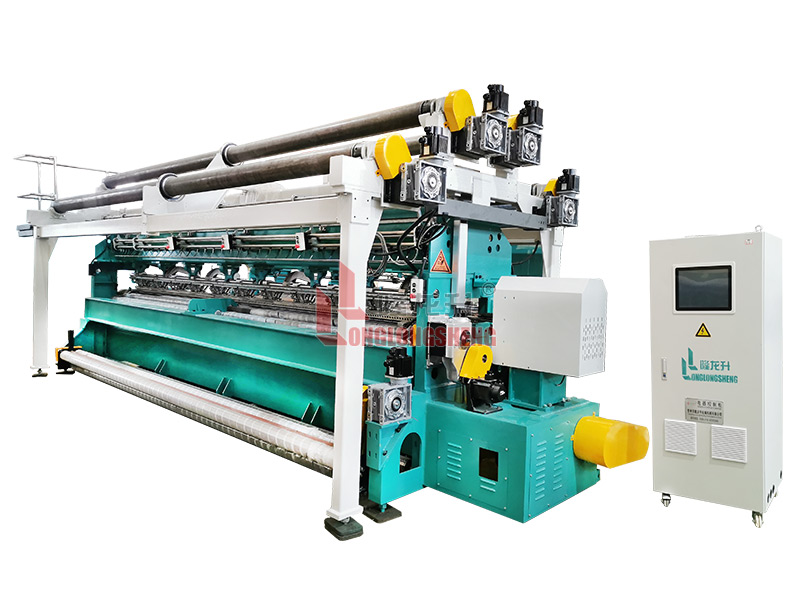
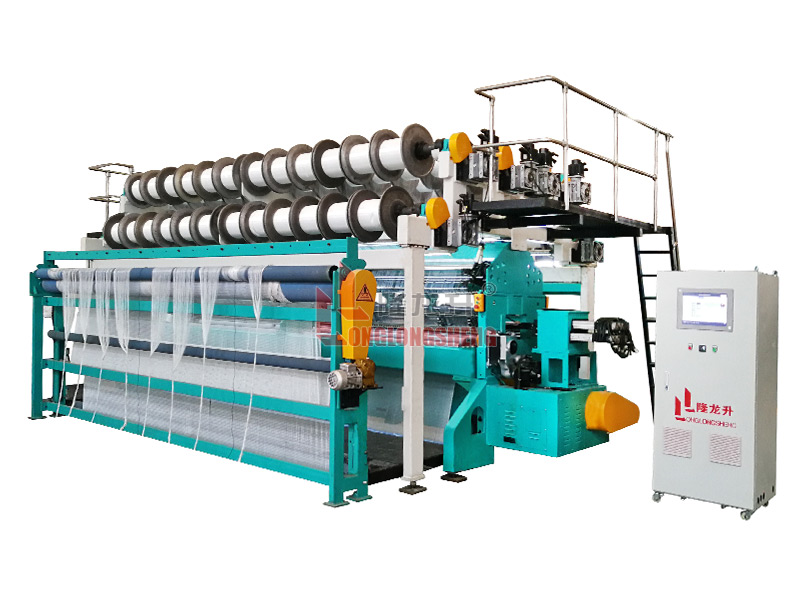
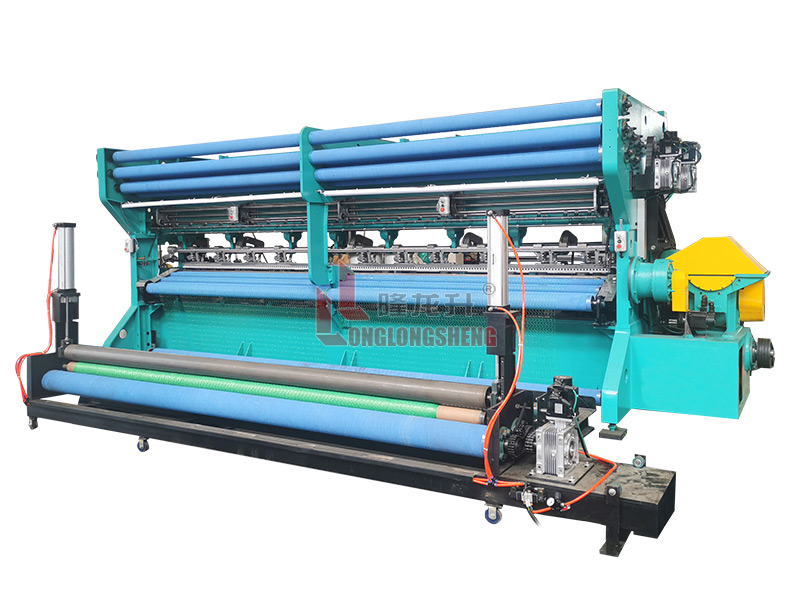
LONGLONGSHENG machine - Warp knitting machine China Suppliers
Mobile Browse


Sources: Longlongsheng | Release date: 2026-09-05 14:35:26 | View: 7749
Abstract:
See how LongLongSheng helped Spain-based IRC upgrade fishing net production with a coordinated warping, warp knitting, finishing and packaging solution.
For professional fishing net manufacturers, a production line has to do more than produce mesh. The yarn must be prepared consistently, the warp knitting process must remain stable, and the finished net must meet the requirements of its intended application. When production volumes increase, weaknesses in any one of these stages can affect the efficiency and consistency of the entire factory.
This was the situation faced by IRC, a Spanish manufacturer serving fishing, aquaculture, sports, safety, and protective netting applications. IRC has cooperated with LongLongSheng since 2012. Over the course of this long-term relationship, the focus has extended beyond individual equipment to the way different production stages work together.
For IRC, the objective was to establish a more standardized fishing net manufacturing process. LongLongSheng provided a production solution connecting yarn warping, beam preparation, fishing net warp knitting, finishing, packaging, and finished-product handling. Instead of treating the warp knitting machine as an isolated piece of equipment, the project considered the complete route from raw yarn to finished net.
This case study explains the production challenges behind the project, how the fishing net warp knitting production line was organized, why the coordination of warping and knitting matters, and what other fishing net manufacturers can learn from IRC's experience.
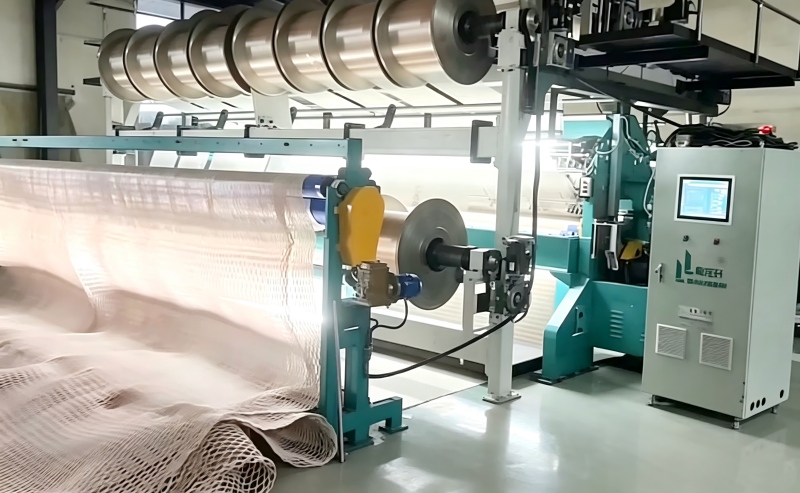
IRC is a Spain-based professional netting company involved in applications including fishing nets, aquaculture nets, sports nets, safety nets, and other protective netting products. These applications can have different requirements for mesh structure, dimensions, strength, handling, and finished appearance.
For a manufacturer serving several netting markets, production flexibility is important, but flexibility cannot come at the expense of consistency. The production system needs to accommodate different product requirements while maintaining a stable yarn supply and repeatable knitting process.
This makes the relationship between yarn preparation, warping, knitting, and finishing particularly important. A finished fishing net reflects not only the performance of the knitting machine, but also the quality and stability of the processes that feed it.
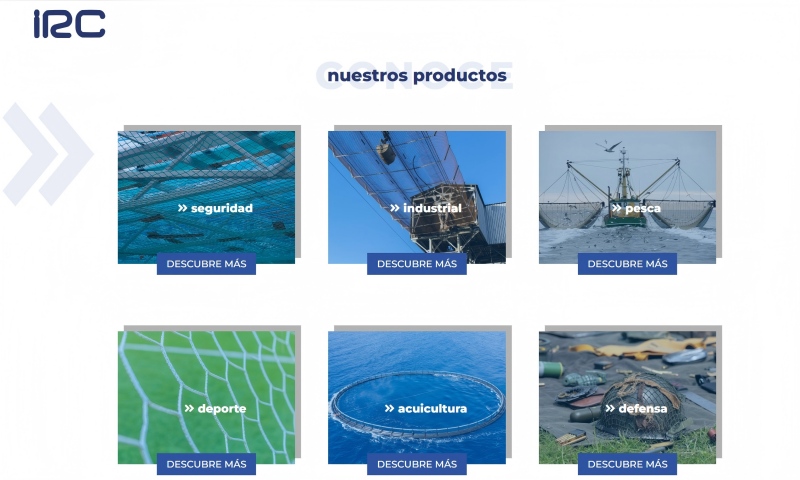
The project supported production for a range of professional netting applications, including:
• Commercial fishing nets
• Aquaculture nets
• Sports nets
• Safety and protective nets
Although these products share the basic principle of forming a mesh structure, their specifications can vary significantly. This is why a production solution should be planned around the customer's actual products rather than around a machine specification alone.
Fishing net production is a continuous process. Yarn enters the production system, is prepared and arranged, reaches the warp knitting machine, is formed into a mesh structure, and then moves through finishing and handling stages.
If yarn tension, yarn arrangement, or feeding conditions fluctuate, the effects can appear during knitting. Operators may then need to intervene more frequently, and differences can become visible in mesh formation or finished-net appearance.
For manufacturers handling professional or export-oriented orders, a repeatable process is therefore important. The goal is not simply to make a net; it is to make the required net consistently across production runs.
|
Project Item |
Details |
|
Customer |
IRC |
|
Country |
Spain |
|
Industry |
Fishing and Netting Manufacturing |
|
Applications |
Fishing Nets, Aquaculture Nets, Sports Nets and Safety Nets |
|
Core Solution |
Fishing Net Warp Knitting Production Line |
|
Main Process |
Raw Yarn → Warping → Beam Preparation → Warp Knitting → Finishing → Packaging |
|
Cooperation |
Long-term cooperation since 2012 |
|
Solution Provider |
LongLongSheng |
The project was built around one practical principle: each stage should prepare the material and conditions required by the next stage. In other words, the production line should work as a system rather than as a collection of independent machines.
This approach is especially relevant to fishing net production because the knitting stage depends heavily on the condition of the yarn supplied to it. A well-organized upstream process can make downstream production easier to control and manage.
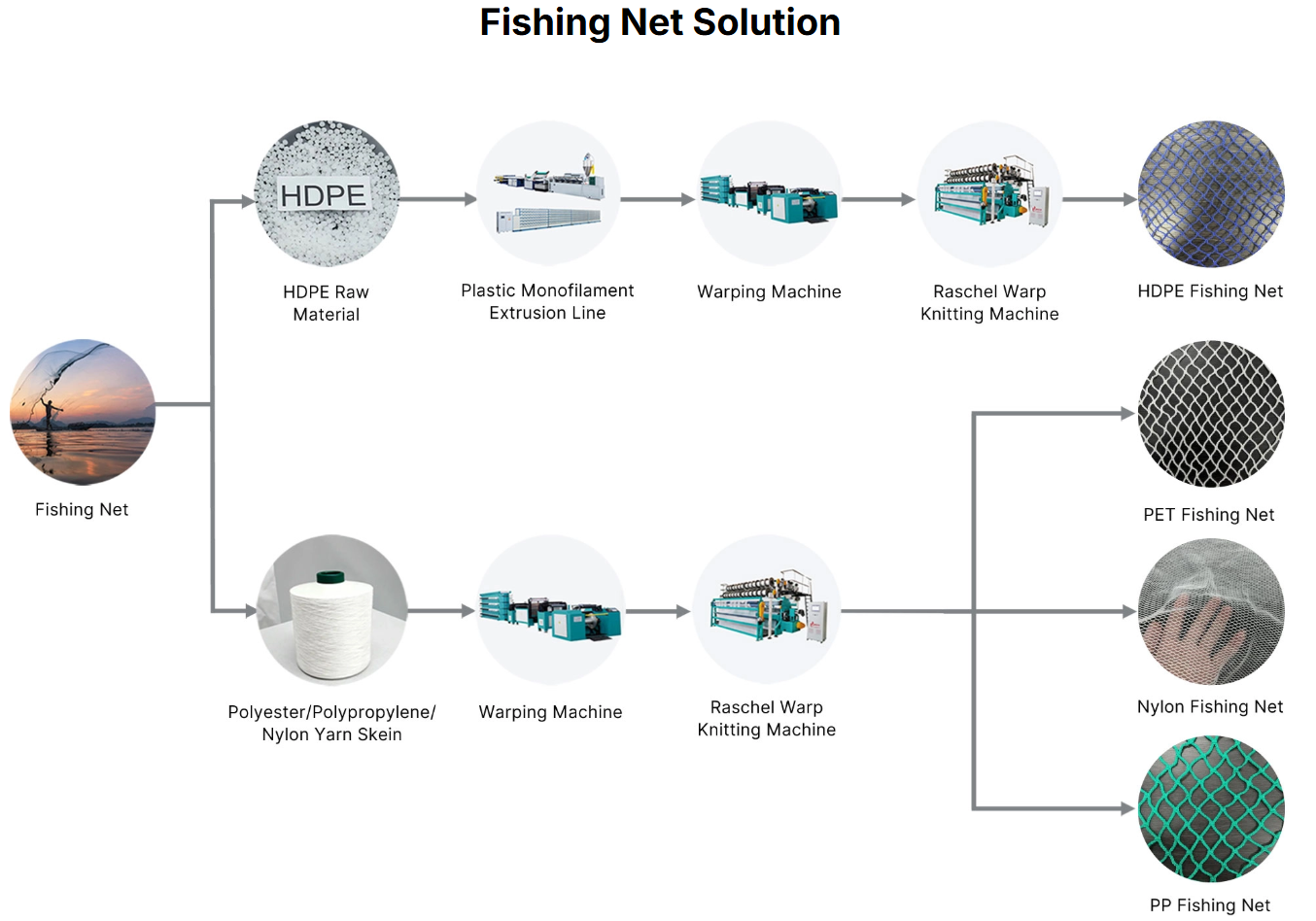
As order requirements developed, IRC needed a production workflow that could provide greater consistency and reduce unnecessary manual intervention. The challenge was not one isolated machine fault. It was the coordination of several stages that collectively affected production efficiency and product quality.
Warp knitting uses a large number of yarn ends that need to reach the knitting elements in an organized condition. If yarn arrangement is inconsistent during preparation, the problem can carry into the knitting stage.
For IRC, improving the organization of the yarn before knitting was therefore an important part of the production upgrade. A standardized warping process could provide a more orderly yarn supply and make the transition to beam-mounted knitting more systematic.
Manual yarn arranging and auxiliary operations can become a bottleneck when production volume increases. They also make the stability of production more dependent on operator experience.
Reducing unnecessary manual handling does not mean eliminating skilled operators. Instead, it means allowing operators to focus on machine supervision, process control, quality inspection, and other tasks while repetitive preparation work is standardized wherever practical.
Warping and knitting are closely connected. The warping process prepares the yarn package that will ultimately supply the knitting machine. If the beam preparation does not match the requirements of the knitting process, the knitting section may experience avoidable tension or feeding problems.
IRC therefore needed to look at the two stages together. The production line was organized so that the output of the warping process became a suitable input for the fishing net warp knitting process.
Yarn breakage can interrupt continuous production and require operator intervention. Frequent interruptions may reduce effective machine utilization and can also complicate quality management.
A stable yarn preparation and feeding process cannot eliminate every possible yarn break, because yarn quality and production conditions also matter. However, better process organization can reduce avoidable variation and create more predictable operating conditions.
The requirements of professional fishing and aquaculture nets extend beyond basic mesh formation. Depending on the application, manufacturers may need to control properties such as strength, toughness, dimensional stability, handling characteristics, and appearance.
For this reason, the production solution needed to continue beyond knitting. Finishing, post-treatment, packaging, and product handling were considered as parts of the overall workflow.
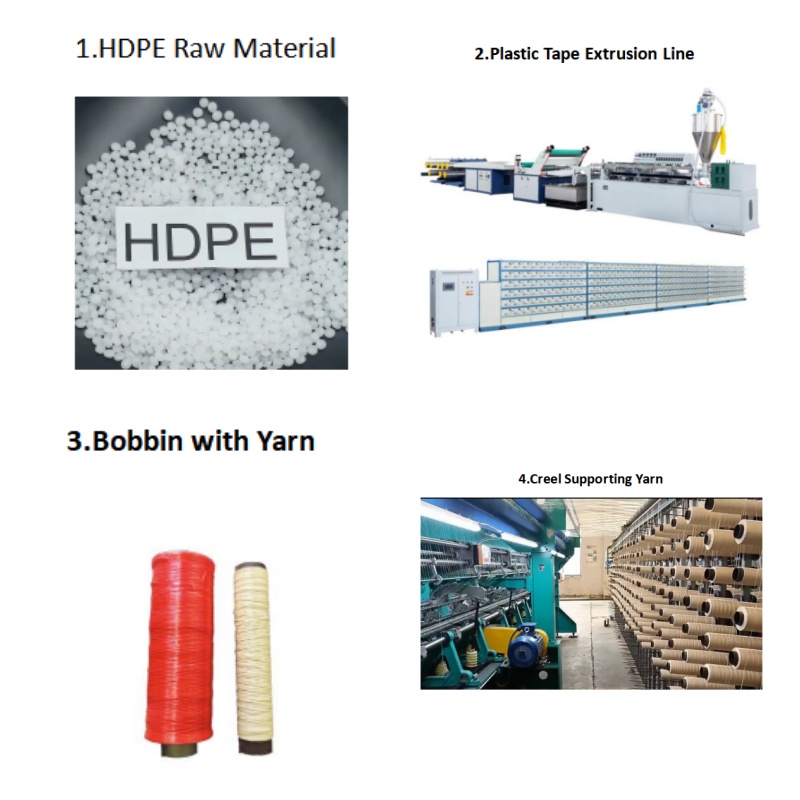
A fishing net warp knitting machine is the core forming equipment, but it does not operate independently. The machine requires an appropriate yarn supply, prepared beams, suitable production settings, and downstream handling.
If a factory purchases a new knitting machine without improving the processes before and after it, existing bottlenecks can remain. The knitting machine may have the capacity to produce more, while yarn preparation, manual handling, or finishing becomes the limiting factor.
IRC's project therefore focused on process matching. The objective was to connect the main stages into a clearer manufacturing route:
Raw Yarn → Warping → Yarn-Filled Beam → Fishing Net Warp Knitting → Finishing → Packaging → Warehousing.
This system-oriented approach also creates a clearer basis for future production planning because each stage has a defined role in the manufacturing process.
The process begins with raw yarn selected according to the intended net product. Yarn material and specifications can vary between fishing, aquaculture, sports, and safety net applications, so the production setup needs to reflect the customer's actual requirements.
The purpose of this first stage is to establish the correct input material before it enters the mechanical preparation and knitting process.
The warping machine arranges the yarn onto a beam under controlled conditions. Its role is fundamental because the beam becomes the organized yarn source for the subsequent warp knitting operation.
A properly managed warping process helps provide:
• More orderly yarn arrangement
• More consistent yarn tension
• Stable yarn supply
• Better preparation for beam-mounted knitting
• A more repeatable transition from yarn preparation to fabric formation
For a fishing net factory, warping should therefore be considered part of the product-making process rather than merely a preliminary winding operation.
After warping, the yarn-filled beam is prepared for the fishin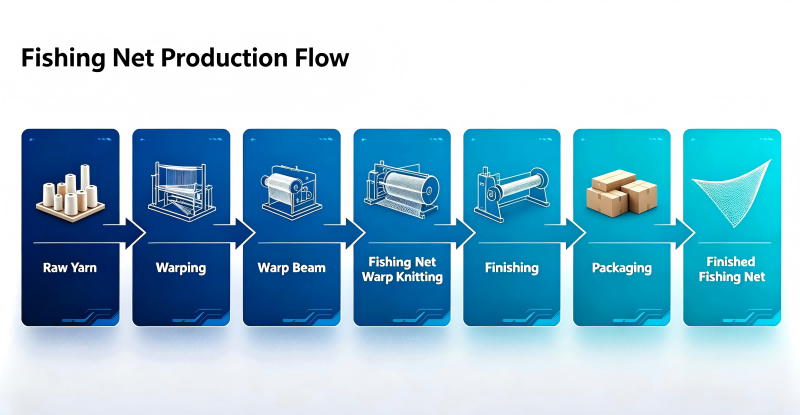 g net warp knitting machine. The purpose is to create a direct and organized connection between the prepared yarn and the knitting section.
This step is easy to overlook in a simplified production diagram, but it is important from a practical manufacturing perspective. The beam represents the bridge between yarn preparation and continuous warp knitting.
The fishing net warp knitting machine is the core forming equipment in the line. In warp knitting, yarns are fed from warp supplies and manipulated by guide bars and knitting elements to form continuous loops and an interconnected mesh structure.
For industrial netting, Raschel-type warp knitting technology is commonly used because it can produce continuous open structures for applications such as fishing nets and other technical nets. Depending on the product, machines can be configured for different yarn materials, working widths, gauges, guide-bar arrangements, and mesh specifications.
The important point for IRC was not simply machine speed. The machine needed to fit the product requirements and work reliably with the upstream yarn preparation process. Stable feeding and repeatable knitting conditions are essential when the objective is consistent mesh formation across production runs.
After knitting, the net may require finishing or post-treatment according to its intended use and specification. Finishing can be used to improve handling, flatness, dimensional behavior, toughness, appearance, or other characteristics required by the final product.
Including this stage in the production plan helps avoid a common problem in machinery projects: optimizing the knitting stage while leaving the finished-product process fragmented.
For IRC, finishing was treated as a normal part of the manufacturing workflow, helping connect knitted-net production with the requirements of the finished product.
Once the net has passed through the required finishing process, it needs to be handled, packaged, and stored in an organized manner.
Standardized packaging and warehousing make finished products easier to identify, inspect, protect, and prepare for shipment. For an export-oriented manufacturer, these downstream activities are part of production management rather than simply administrative tasks.
The complete production route can be summarized as:
Purchased Raw Yarn → Warping Machine → Yarn-Filled Beam → Fishing Net Warp Knitting Machine → Finishing & Post-Treatment → Packaging → Warehousing
Each stage has a different function, but the output of one stage becomes the input of the next.
The yarn is selected according to the required fishing net product and production specification.
Yarn is arranged onto the warp beam with controlled positioning and tension.
The completed beam is prepared for installation and yarn supply to the warp knitting machine.
The prepared yarn is continuously formed into the required mesh structure.
The knitted net receives the required finishing or post-treatment according to its application.
Finished nets are prepared for storage, inspection, and shipment.
Products are organized for efficient inventory management and delivery.
This sequence also explains why production-line planning matters. If a problem appears upstream, it can affect the knitting stage; if downstream finishing cannot keep up, the benefit of increased knitting capacity may be limited. A balanced production process therefore has value beyond any individual machine specification.
Warping is sometimes treated as a secondary operation because it does not create the final mesh. In practice, it establishes the yarn arrangement that the knitting machine must work with.
The knitting machine can only form a stable structure when the yarn supply is presented in an appropriate condition. Consistent arrangement and tension help the knitting process operate under more predictable conditions.
For this reason, fishing net manufacturers evaluating a new production line should not compare knitting machines alone. The compatibility between the warping system, beam preparation, yarn characteristics, and knitting machine can be just as important to the overall result.
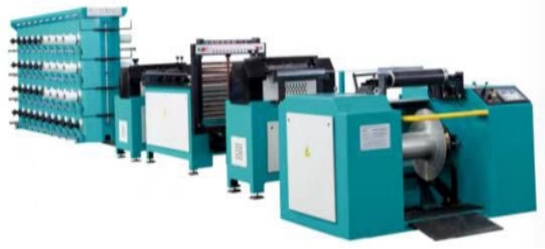
In a warp knitting process, yarns are supplied from warp beams and guided through the knitting zone. Guide bars control the relative movement of the yarns, while the knitting elements form loops. These loops interconnect to create the continuous mesh structure.
The exact structure depends on the machine configuration, yarn characteristics, guide-bar movements, machine gauge, and production settings. This is why the same general type of machine can be used to produce different net structures when appropriately configured.
For fishing net applications, the objective is to achieve the required combination of mesh opening, yarn arrangement, strength, flexibility, and overall construction. The production settings therefore need to be matched to the customer's product rather than selected only for maximum mechanical speed.
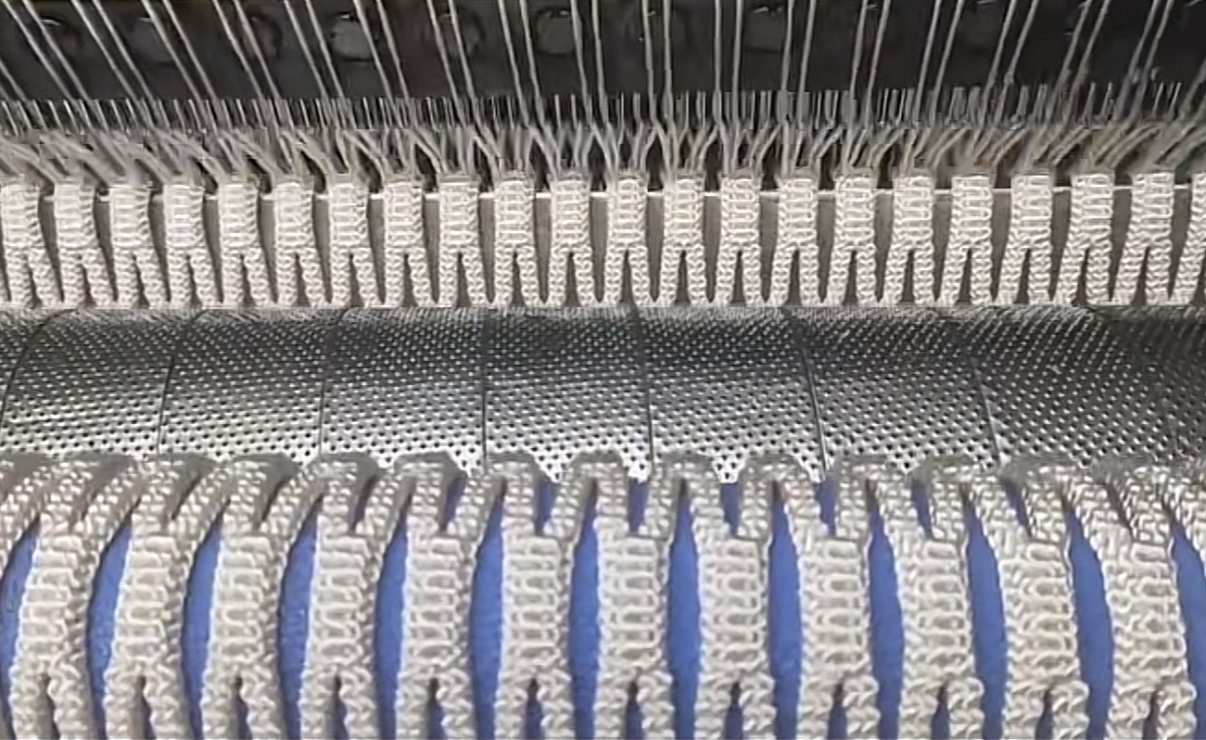
The main difference was the decision to view the production process as a connected system. Warping, beam preparation, knitting, finishing, and packaging were considered together.
This reduces the risk of creating a new bottleneck when one machine is upgraded without considering the surrounding operations.
IRC serves several netting applications, so the production solution had to remain relevant to different product requirements. Fishing nets and aquaculture nets may require different structures from sports or safety nets.
The machine and process should therefore be evaluated according to the target product, yarn, mesh specification, width, and required finished properties. This application-based approach is more useful than choosing equipment from a single headline parameter.
A machine-centered project often ends when the knitting machine is installed. A production-line project continues through finishing, packaging, and product handling.
For IRC, the solution considered the complete route to finished nets. This helped make the production process easier to understand and manage as a whole.
Long-term cooperation creates an additional source of practical knowledge. The supplier can better understand the customer's operating requirements, while the customer becomes familiar with the equipment, process, and support system.
For overseas machinery projects, this continuity can be useful when production requirements change, new products are introduced, or equipment needs to be upgraded.
For a production line, delivery is only one part of project completion. The equipment must be installed, commissioned, adjusted, and integrated into the customer's operating routine.
LongLongSheng's support for international customers includes installation and commissioning guidance, process assistance, operator training, troubleshooting support, spare-parts supply, and ongoing technical service.
Operator training is particularly important for a warp knitting production line because stable production depends not only on machine mechanics but also on correct setup, yarn preparation, routine inspection, and timely response to abnormalities.
The objective of technical support is therefore to help the customer move from equipment installation to repeatable production.
The project helped IRC move toward a more standardized fishing net manufacturing workflow. Rather than relying on disconnected production stages, the company gained a clearer route from raw yarn through warping, warp knitting, finishing, and final handling.
The main improvements can be summarized as follows:
The route from raw yarn to finished fishing net became clearer and easier to organize.
More standardized preparation and knitting processes reduced reliance on repetitive manual operations.
The yarn preparation stage was matched more closely with the requirements of the knitting process.
A more controlled yarn supply and knitting workflow supported greater consistency in mesh formation.
Finishing, packaging, and warehousing were incorporated into the overall production workflow.
A more systematic production process gave IRC a stronger basis for handling growing order requirements.
These results are intentionally described without unsupported percentage claims. For a machinery case study, the most credible evidence is the documented change in production workflow, the customer's continued cooperation, and the customer's own evaluation of equipment and technical support.
The IRC project represents a long-term industrial relationship rather than a one-time equipment transaction.
Since 2012, IRC and LongLongSheng have worked together on fishing net production requirements and equipment. Over time, this type of cooperation can develop beyond basic machine supply because both sides gain experience with the customer's products, operating conditions, and technical expectations.
For the customer, a familiar supplier can reduce the learning curve associated with new equipment and make technical communication more direct. For the supplier, long-term cooperation provides a better understanding of how the customer's production needs evolve.
This is particularly relevant to fishing net manufacturers because production requirements can change with product mix, order volume, market applications, and customer specifications. A machinery partner that understands the existing production process can provide more practical input when an upgrade is required.
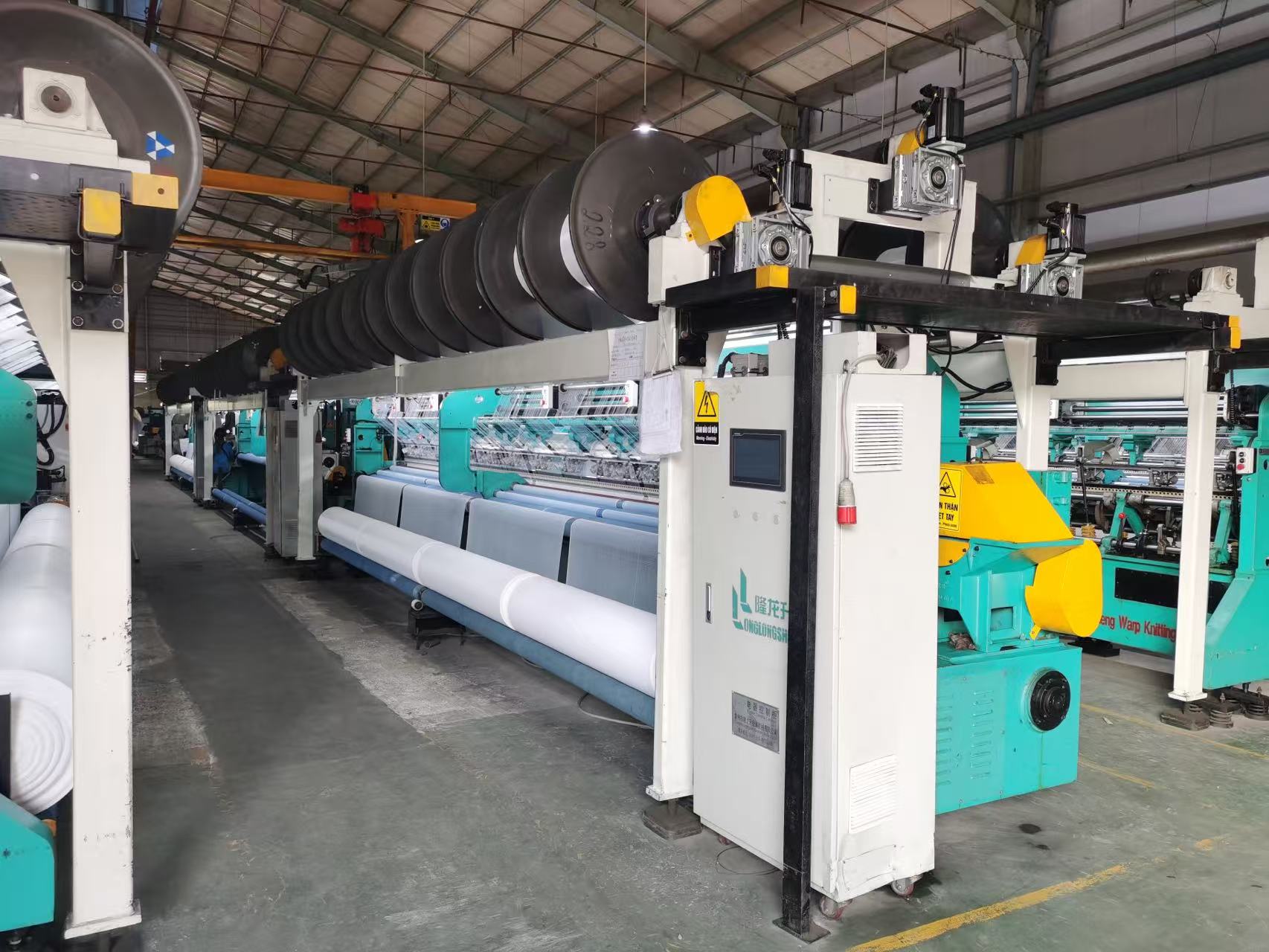
“We have cooperated with this manufacturer since 2012. Their professional fishing net warp knitting production solution and stable equipment quality have helped us upgrade our production line greatly. The whole process is mature and reliable, and the after-sales technical support is timely and professional. It is our most trustworthy long-term partner in China.”
— Person in Charge of IRC, Spain
Before choosing equipment, define the target net products, applications, yarn materials, mesh specifications, working widths, production volume, and finishing requirements. Machine selection should follow the product requirements.
Warping determines how yarn is arranged and supplied to the knitting machine. A stable knitting process begins with a suitable yarn preparation process.
Increasing knitting capacity alone does not automatically increase factory throughput. Warping, beam preparation, finishing, packaging, and other supporting operations also need to be able to match the production requirements.
Machine speed is an important specification, but stable yarn feeding, consistent mesh formation, manageable operation, and finished-net quality are equally important when evaluating long-term production performance.
For overseas customers, installation, commissioning, training, spare parts, troubleshooting, and long-term technical support can have a direct effect on how smoothly a production line is put into operation.
A supplier that can discuss yarn preparation, warp knitting, finishing, and production organization together may be better positioned to provide a practical production solution than a supplier focused only on one machine.
A typical workflow can include yarn preparation and warping equipment, a fishing net warp knitting machine, finishing or post-treatment equipment, and packaging and handling systems. The exact configuration depends on the net product and factory requirements.
Warping organizes yarn onto a beam and establishes a suitable yarn supply for the warp knitting process. Consistent yarn arrangement and tension can help create more predictable knitting conditions.
Fishing net machines can be configured for different synthetic yarns depending on the machine and product, including materials such as HDPE, polypropylene, polyester, and nylon. The correct choice depends on the required net properties and application.
A suitable machine configuration can support different net structures and applications, but the machine gauge, guide-bar configuration, yarn, working width, and process settings need to match the target products.
It depends on the factory. If yarn preparation, warping, finishing, or packaging are existing bottlenecks, upgrading only the knitting machine may not solve the overall production problem. A complete-line approach is useful when multiple stages need to be coordinated.
Important factors include target net type, yarn material, mesh size, working width, production volume, machine gauge, guide-bar requirements, finishing method, available factory space, operator skills, and after-sales support.
LongLongSheng provides fishing net warp knitting machinery and production solutions for fishing, aquaculture, sports, safety, and other industrial netting applications. For manufacturers evaluating a new fishing net production line, the starting point should be the actual net product and manufacturing requirements, followed by a production solution designed around those requirements.
If you are planning to upgrade your fishing net production line or are looking for a complete fishing net manufacturing solution, LongLongSheng can provide professional technical consultation, equipment selection and production line solutions based on your specific requirements.
Contact LongLongSheng to discuss your fishing net production project and find the right warp knitting solution for your application.
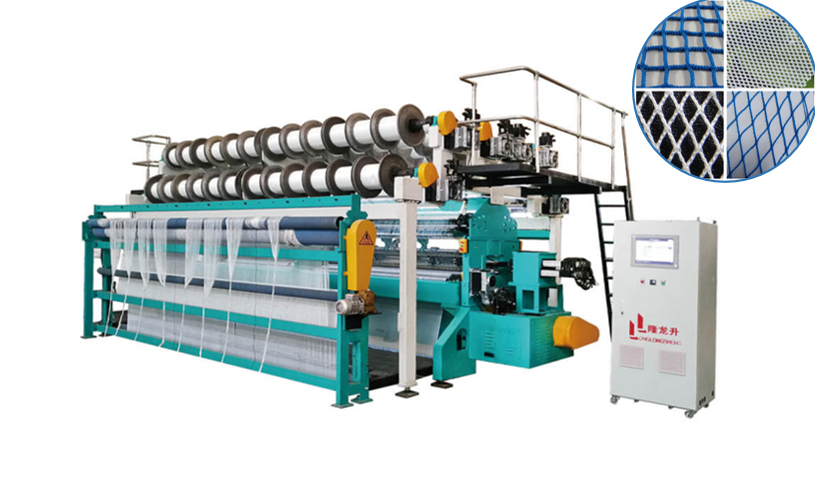
Discover LongLongShengs GE2815 warp knitting machine for tubular nets and flexible bag fabrics, featuring 8 guide bars an…
Discover the HSGE2320-220EL 220-inch warp knitting machine for fishing, protective, cage and stone nets with stable yarn …
See how LongLongSheng helped Spain-based IRC upgrade fishing net production with a coordinated warping, warp knitting, fi…