LONGLONGSHENG machine - Warp knitting machine China Suppliers
Mobile Browse


Sources: Longlongsheng | Release date: 2026-09-23 17:30:51 | View: 5844
Abstract:
Discover the HSGE2320-220EL 220-inch warp knitting machine for fishing, protective, cage and stone nets with stable yarn feeding.
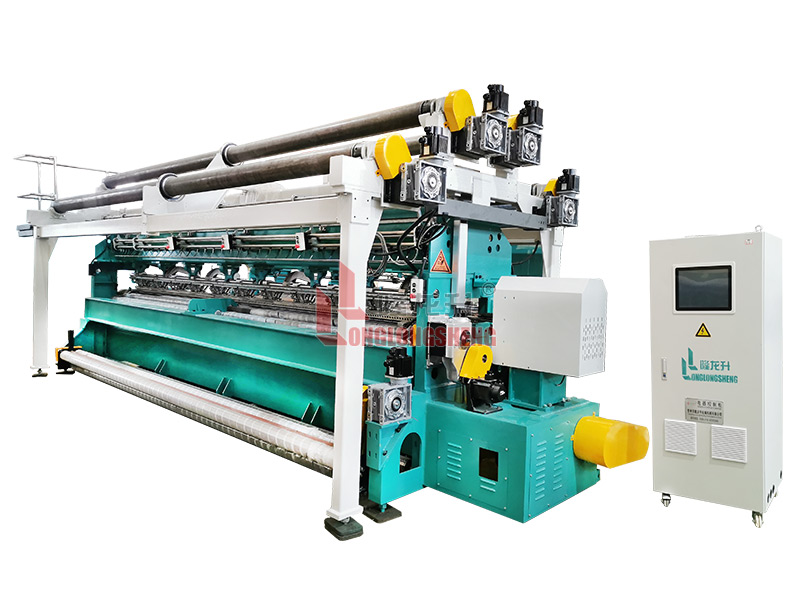
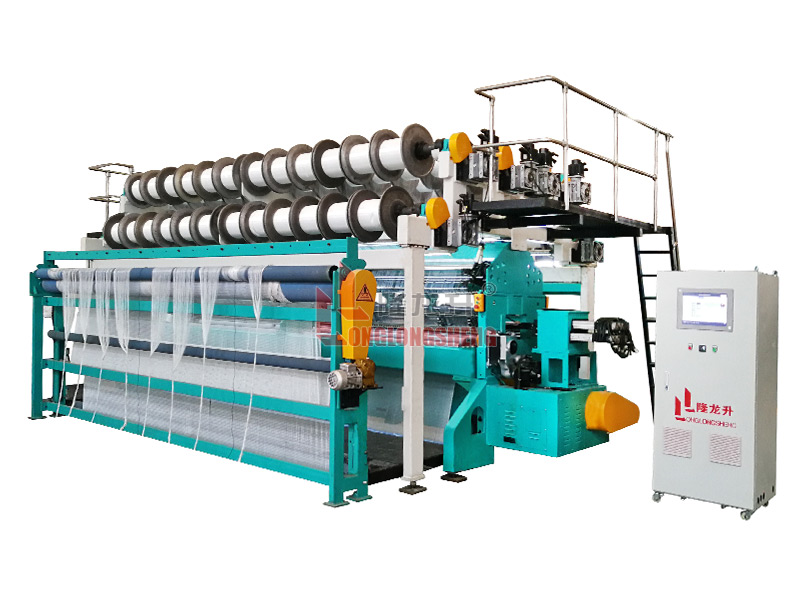
The HSGE2320-220EL 220-inch fishing net warp knitting machine is a high-speed warp knitting solution developed by LongLongSheng for manufacturers producing wide-width fishing nets and other industrial net fabrics. With a 220-inch working width and E1 gauge, the machine is designed around the production requirements of large-format net fabrics where stable yarn delivery, consistent knitting formation and flexible mesh specifications are important.
The machine integrates LIBA technology, a specially designed knitting-forming section and a five-roller yarn feeding system for multi-strand polyethylene yarn. Intelligent control supports flexible production management, while the wide working width provides a practical production platform for fishing nets, protective nets, cage nets, stone nets and related mesh products.
For manufacturers evaluating a wide-width fishing net knitting machine, the important question is not simply how large the machine is. Working width, yarn feeding, knitting formation, mesh structure, production stability and the intended end product all need to work together. This article explains the HSGE2320-220EL from that production perspective.
The HSGE2320-220EL is part of LongLongSheng's warp knitting machinery portfolio. Changzhou Longlongsheng Warp Knitting Machinery Co., Ltd. focuses on the research and manufacture of warp knitting machinery and develops equipment for applications including fishing nets, shade nets, sports nets, agricultural nets, safety nets, protective nets and other mesh products. The company's official profile states that it has manufactured warp knitting machines since 1994 and has supplied thousands of machines, with installations in overseas markets. citeturn0view0
This experience is relevant to wide-width net production because a machine is only one part of a complete manufacturing process. Yarn preparation, feeding, knitting formation, inspection and downstream handling all affect the final net. LongLongSheng's product and application portfolio therefore covers both individual machines and broader net-production solutions.
Fishing net production becomes more demanding as manufacturers move toward larger fabric widths, heavier or multi-strand yarns, different mesh dimensions and higher production requirements. A wide-width machine has to maintain a consistent knitting process across a much larger working area. Small variations in yarn delivery or knitting formation can become more visible when the fabric extends across the full width.
Working width directly affects the format of fabric that can be produced. A wider machine can reduce the need to divide a wide product into narrower sections, which can simplify certain production arrangements and help manufacturers plan products around the required finished width. The correct width, however, should always be selected according to the target net structure, finishing method and downstream process.
For a wide-width fishing net machine, stable operation is more than a mechanical requirement. It influences mesh uniformity, fabric appearance and production consistency. A production system needs to control yarn delivery and knitting formation so that the intended structure can be maintained from one side of the machine to the other.
Fishing nets can use demanding yarn configurations, particularly when multi-strand yarns are involved. Consistent yarn feeding helps the knitting elements receive yarn at a controlled and repeatable rate. This is one reason the HSGE2320-220EL incorporates a five-roller yarn feeding arrangement designed for multi-strand polyethylene yarn.
The HSGE2320-220EL combines four main design ideas: wide working width, a dedicated knitting-forming section, controlled yarn feeding and intelligent machine control. These features should be viewed as parts of one production system rather than isolated specifications.
· 220-inch working width for wide-format net production.
· E1 gauge configuration for the intended net-fabric production range.
· LIBA technology and a specially designed knitting-forming section to support knitting stability.
· Five-roller yarn feeding for multi-strand polyethylene yarn.
· Intelligent control for flexible production adjustment and operation management.
· Application focus on fishing nets and other industrial net fabrics such as protective, cage and stone nets.
A 220-inch working width gives the HSGE2320-220EL a clear positioning in wide-width net manufacturing. For manufacturers producing large-format fishing or industrial nets, the available width is an important starting point when matching machinery to product specifications.
The required machine width depends on the product being manufactured. If the finished net is relatively narrow, a very wide machine may not be necessary. For larger products, however, insufficient working width can create additional handling or production considerations. A 220-inch platform provides manufacturers with a wide production area while retaining the ability to configure production around different mesh requirements.
The right comparison is not simply wider versus narrower. Manufacturers should compare working width together with yarn compatibility, mesh range, knitting formation, production stability, control functions and downstream requirements. A machine should be selected based on the complete production specification rather than one headline number.
Yarn behavior has a direct effect on the knitting process. When the machine works with multi-strand polyethylene yarn, consistent feeding becomes particularly important. Variations in yarn delivery can affect loop formation and, ultimately, the geometry of the net.
A wide knitting area requires the formation system to work consistently across the machine width. The design of the knitting-forming section therefore matters when manufacturers are targeting stable fabric formation during continuous production.
Fishing net specifications can vary significantly. Mesh size, mesh depth, yarn type and fabric construction all influence the final product. A production system must therefore provide appropriate control and adjustment rather than relying on a single fixed configuration.
Net manufacturers often need to respond to different customer specifications. The ability to adjust production parameters and manage different mesh requirements can be important when a factory produces several product types. Intelligent control can support this flexibility by making machine operation and parameter management more systematic.
The HSGE2320-220EL uses LIBA technology together with a specially designed knitting-forming section. For a wide-width net machine, the knitting-forming section is central to how yarn is converted into the intended mesh structure. The design is intended to support rigidity and production stability while maintaining the knitting process across the working width.
For buyers, this means the machine should be evaluated not only by its nominal width, but also by how its forming system supports the specific net structure and yarn configuration required by the factory.
The machine uses a five-roller yarn feeding system designed for multi-strand polyethylene yarn. A controlled feeding arrangement is important in net production because the yarn must be delivered to the knitting zone consistently enough to support repeatable loop and mesh formation.
For manufacturers, yarn compatibility should still be confirmed before ordering. The final yarn type, strand configuration, thickness, mesh size and production target should be matched with the machine configuration and process conditions.
The HSGE2320-220EL uses an E1 gauge configuration. Gauge is one of the basic machine characteristics that should be considered together with yarn size and the target net construction. It should not be evaluated separately from the intended product.
Intelligent control supports parameter management and operational flexibility. In practical production, manufacturers may need to change mesh specifications, yarn settings or other process parameters between orders. A control system that organizes these adjustments can help operators manage different production requirements more efficiently.
Before selecting a fishing net warp knitting machine, manufacturers should define the actual product specification. A machine that appears suitable by working width alone may not match the required yarn or mesh structure. The following parameters are especially important.
Mesh size is one of the most visible characteristics of a fishing net. Different fishing applications require different mesh dimensions, so the machine configuration needs to match the target product. The appropriate mesh range should be confirmed according to the intended fabric construction and yarn.
MD, or mesh depth, describes the depth dimension of the net structure and is an important part of product specification. When discussing a machine with a customer, MD should be considered alongside mesh size, yarn and finished fabric width rather than treated as an isolated number.
The yarn material affects strength, flexibility, abrasion resistance and processing behavior. Polyethylene yarn is commonly associated with fishing and industrial net applications, but the exact yarn specification must be matched to the machine and product requirement.
Finished width is closely related to the machine's working width, but it is not necessarily identical to the nominal machine width in every production arrangement. Manufacturers should consider selvage, trimming, finishing and downstream handling when defining the required working width.
The HSGE2320-220EL product information includes a reference production configuration for 13 mm net fabric with 110 MD. This should be treated as a reference specification rather than a universal production limit. Actual results depend on yarn, mesh structure, machine configuration and process conditions.
The HSGE2320-220EL is designed with multi-strand polyethylene yarn feeding requirements in mind. Polyethylene yarn can provide the combination of strength and low weight required in many net applications, but its processing behavior depends on the specific yarn construction.
A good machine selection begins with the finished net, then works backward to the yarn and machine configuration. Manufacturers should define the required mesh size, net depth, strength, weight, width and intended use before finalizing the yarn specification.
Even a well-designed warp knitting machine depends on proper yarn preparation. Beam quality, yarn tension, yarn condition and preparation consistency can influence production stability. For this reason, the machine should be considered as part of the complete production process rather than as an isolated piece of equipment.
Understanding the production flow helps buyers evaluate what they actually need from a fishing net warp knitting machine.
The process begins with yarn preparation. The yarn needs to be organized and supplied in a condition suitable for continuous warp knitting. Consistent preparation helps reduce avoidable variation during production.
Yarn is delivered toward the knitting area through the machine's feeding system. On the HSGE2320-220EL, the five-roller arrangement is designed for controlled feeding of multi-strand polyethylene yarn.
The knitting-forming section converts the supplied yarn into the intended loop structure. The forming system and machine configuration influence how the mesh is created and maintained.
As knitting continues, the loops form the repeating mesh geometry required by the product specification. Mesh size and net depth need to remain consistent with the target product.
The produced net should be inspected for mesh consistency, visible defects, yarn issues and overall fabric quality. Inspection criteria should be established according to the customer's product specification.
After knitting, the net is handled according to the factory's finishing and packaging process. Depending on the product, downstream operations can include cutting, folding, rolling, packing or other finishing steps.
Fishing nets are a primary application of the machine. The wide working width and net-oriented design make the HSGE2320-220EL suitable for manufacturers focused on large-format fishing net production.
Protective nets are used in different industrial and safety-related applications. Their specifications can vary widely, so the appropriate yarn, mesh and fabric construction should be defined before production.
Cage nets can be used in aquaculture and related applications. Depending on the end use, manufacturers may require specific mesh dimensions, strength and fabric width.
Stone nets are used in applications where net structure and mechanical performance are important. The required yarn and mesh construction should be selected according to the intended use.
The machine can also be considered for other net-fabric applications where the required yarn, mesh and production configuration fall within the machine's technical capability. Final suitability should be confirmed against the customer's actual product specification.
Net manufacturers rarely produce one specification forever. Customer orders can differ in mesh size, depth, yarn and finished width. A flexible machine configuration can therefore be valuable for factories that need to serve multiple product segments.
Intelligent control and a wide working width can support production planning across different orders. Before changing from one product specification to another, operators should follow the machine's recommended setup and verify the resulting fabric against the required quality standard.
Stable yarn delivery remains important when production specifications change. The five-roller feeding system is intended to provide controlled delivery of multi-strand polyethylene yarn, helping create a consistent basis for the knitting process.
The HSGE2320-220EL is intended for manufacturers whose production requirements call for a wide working width and net-oriented warp knitting capability. It may be relevant to:
· Fishing net manufacturers producing wide-format net fabrics.
· Aquaculture and cage-net manufacturers with large-width production requirements.
· Industrial net producers making protective or stone nets.
· Factories expanding from narrower equipment toward wider production formats.
· Manufacturers seeking a warp knitting machine that can accommodate multi-strand polyethylene yarn requirements.
The best machine configuration depends on the actual product. Buyers should provide sample net specifications, yarn details, required width and expected production targets so that the machine can be evaluated against the real application.
|
Specification |
HSGE2320-220EL |
|
Machine Model |
HSGE2320-220EL |
|
Machine Type |
High-Speed Warp Knitting Machine |
|
Working Width |
220 inches |
|
Gauge |
E1 |
|
Technology |
LIBA Technology |
|
Knitting Formation |
Specially designed knitting-forming section |
|
Yarn Feeding |
Five-roller yarn feeding |
|
Suitable Yarn |
Multi-strand polyethylene yarn |
|
Main Applications |
Fishing nets, protective nets, cage nets, stone nets |
|
Mesh |
Adjustable according to production configuration |
|
Reference Net Specification |
13 mm net fabric with 110 MD |
|
Control |
Intelligent Control |
Note: Final machine configuration and production specifications should be confirmed according to yarn type, mesh size, fabric structure, working width and customer production requirements.
Start with the finished product. Determine the required net width, production method, finishing allowance and downstream handling requirements. Then select the appropriate working width.
Confirm the yarn material, strand structure, thickness and feeding requirements. If the production uses multi-strand polyethylene yarn, verify the machine's feeding configuration and recommended operating conditions.
Specify mesh size, MD, yarn and net construction before comparing machines. These parameters determine whether the machine configuration is appropriate for the target product.
Ask how the machine manages yarn feeding, knitting formation and operation across the full working width. For wide-width production, stability is an important part of practical output.
If the factory expects to add new net products, consider whether the machine can provide the necessary flexibility. A machine should support the production roadmap rather than only today's single specification.
Also evaluate yarn preparation, warping, inspection, winding and packaging. A high-performance knitting machine works best when the upstream and downstream processes are matched to its production requirements.
· What is the required finished net width?
· What yarn material and yarn construction will be used?
· What mesh sizes and MD specifications are required?
· What is the target net weight and fabric structure?
· Is the production mainly for fishing nets, cage nets, protective nets or stone nets?
· What level of production flexibility is required between different orders?
· What yarn preparation and downstream equipment are already available?
· What machine configuration should be used for the customer's sample net?
The HSGE2320-220EL has a 220-inch working width, making it a wide-width warp knitting machine for large-format net production.
The main target applications include fishing nets, protective nets, cage nets and stone nets. Other industrial net fabrics may also be possible when the yarn and mesh specifications match the machine configuration.
The machine uses a five-roller yarn feeding system designed for multi-strand polyethylene yarn. The final yarn specification should be confirmed according to the target net.
The machine uses an E1 gauge configuration. Gauge should be evaluated together with yarn specification and the required net structure.
The machine is designed for flexible net production, and mesh specifications can be adjusted according to the production configuration. The achievable range should be confirmed against the specific yarn, mesh and fabric structure required.
It is a reference production configuration associated with the machine. It should not be interpreted as a universal specification for every production condition. Final results depend on the selected yarn, mesh structure and machine configuration.
It is designed to provide controlled yarn delivery for multi-strand polyethylene yarn. Consistent yarn feeding supports stable knitting formation and repeatable mesh production.
The most useful information includes target net type, finished width, mesh size, MD, yarn material and construction, desired production output, fabric structure and any existing upstream or downstream equipment. A sample or technical specification can further improve the accuracy of machine selection.
The HSGE2320-220EL 220-inch fishing net warp knitting machine is designed for manufacturers that need a wide working width combined with controlled yarn feeding and stable knitting formation. Its 220-inch working width, E1 gauge, LIBA technology, specially designed knitting-forming section, five-roller yarn feeding system and intelligent control provide a production platform for fishing nets and other wide-format industrial net fabrics.
For manufacturers comparing wide-width warp knitting machines, the most important step is to match the machine with the actual product specification. Working width, yarn, mesh size, MD, fabric structure and downstream requirements should be evaluated together. With the right configuration, the HSGE2320-220EL can form part of an efficient and flexible net-production process.Previous: How to Choose a Warp Knitting Machine for Shade Net Production: Gauge, Width, Yarn and Speed
Next: None
Discover the HSGE2320-220EL 220-inch warp knitting machine for fishing, protective, cage and stone nets with stable yarn …
See how LongLongSheng helped Spain-based IRC upgrade fishing net production with a coordinated warping, warp knitting, fi…
Discover how LongLongSheng built a turnkey shade net production line for a Russian customer, integrating flat yarn extrus…