LONGLONGSHENG machine - Warp knitting machine China Suppliers
Mobile Browse


Sources: Longlongsheng | Release date: 2026-11-13 16:45:21 | View: 6930
Abstract:
Learn about fishing net mesh types, measurement methods and selection factors for commercial fishing, aquaculture and net manufacturing.
Fishing net mesh size is one of the most important factors affecting the structure, performance and application of a fishing net. It determines the size of the openings in the netting and influences how the net interacts with fish, water flow and the surrounding environment.
However, mesh size is not always as straightforward as it looks. Different manufacturers, fishing industries and technical standards may use different measurement methods. For example, mesh size, bar length and mesh opening can describe different dimensions of the same net structure.
Understanding these differences is essential when purchasing fishing nets, specifying netting materials or planning a fishing net manufacturing project.
This guide explains the main types of fishing net meshes, how mesh size is measured, and what factors should be considered when selecting mesh specifications for different applications.
Fishing net mesh size refers to the dimensions of the individual openings formed by the netting yarns. These openings are repeated throughout the net structure and determine the basic geometry of the netting.
Mesh size is commonly expressed in millimetres or inches. However, the exact meaning of a stated measurement depends on the measurement convention being used.
When discussing fishing net specifications, three terms are particularly important:
Mesh size generally describes the dimension of an individual mesh when it is measured according to a defined method. For knotted netting, a commonly used convention is the distance between the centres of two opposite knots when the mesh is fully stretched.
Bar length refers to the length of one side of a mesh, measured between two adjacent knots or joints. For a regular diamond mesh, the stretched mesh measurement is commonly twice the bar length.
For example, a mesh with a bar length of 25 mm may be described as having a stretched mesh size of 50 mm. The specification must clearly state which measurement is being used.
Mesh opening refers to the clear space inside the mesh. It is different from the distance measured between knot centres.
This distinction is especially important when a fishing net must meet specific regulatory requirements or technical specifications. A mesh measurement without a clearly defined measurement method can lead to misunderstandings between buyers and manufacturers.
The FAO'sFisherman's Workbookalso distinguishes stretched mesh size from mesh opening and explains that they should not be treated as interchangeable measurements.
Fishing nets are manufactured with different mesh geometries depending on their intended use, netting material and structural requirements. The most commonly discussed mesh structures include diamond mesh, square mesh and hexagonal mesh.
Diamond mesh is one of the most familiar structures used in fishing netting. Its openings form diamond-shaped patterns when the netting is laid out.
This structure offers flexibility and can change shape when tension is applied. It is widely used in different types of fishing gear, including trawl nets and other commercial fishing nets.
The actual opening of a diamond mesh can change depending on how the netting is mounted, stretched and tensioned. Therefore, its dimensions should be evaluated using the appropriate measurement method.
Compared with diamond mesh, square mesh can maintain a more open shape in certain fishing gear configurations. It is used in applications where mesh orientation and opening characteristics are important.
Its performance depends not only on the nominal mesh dimension but also on the mounting method, yarn properties and operating conditions.
Hexagonal mesh and other specialized structures may also be used in fishing and aquaculture applications.
Different mesh geometries have different structural characteristics. Their measurement methods may also differ, so specifications should identify the mesh type and the exact dimension being stated.
When comparing netting products, buyers should avoid assuming that the same nominal measurement represents the same opening across different mesh structures.
Accurate mesh measurement is essential for quality control, product comparison and compliance with customer specifications.
Before measuring, it is important to confirm whether the required dimension is bar length, stretched mesh size or mesh opening.
For conventional knotted netting, stretched mesh size is commonly measured between the centres of two opposite knots while the mesh is extended in the specified direction.
A practical approach is to:
Place the netting panel on a flat surface.
Identify the direction in which the mesh should be stretched.
Apply consistent tension without damaging or excessively deforming the netting.
Measure between the centres of the two opposite knots.
Repeat the measurement across several meshes and calculate the average.
Measuring several meshes helps reduce the influence of local variation. The measurement procedure should follow the applicable specification or testing standard.
Mesh opening measures the clear internal dimension of the mesh rather than the distance between knot centres.
For knotted and knotless netting, the precise definition can differ. Some testing methods use a mesh gauge with a specified force to ensure that the measurement is repeatable.
For fishing gear subject to regulatory requirements, the relevant local regulation or testing standard should always take priority over an informal measuring method.
Several mistakes can cause confusion when specifying or checking fishing net mesh size:
Mixing bar length with stretched mesh size:These measurements are related but are not the same.
Confusing mesh opening with mesh size:The clear opening is not necessarily equal to the stretched measurement.
Applying inconsistent tension:Different stretching forces may produce different measurement results.
Measuring only one mesh:A single measurement may not represent the overall consistency of a netting panel.
Ignoring the mesh structure:Different mesh geometries may require different measurement directions or methods.
To avoid these problems, manufacturers and buyers should agree on the mesh type, measurement definition, unit and testing method before production or inspection.
Choosing a suitable fishing net mesh size requires more than selecting a number. The correct specification depends on the fishing application, target species, netting material and operating conditions.
The target species is one of the main considerations when selecting mesh size.
Fish body dimensions, fishing methods and the intended retention or escape characteristics of the gear all influence the required mesh specification.
For example, gillnets, trawl nets and aquaculture nets serve different purposes. A mesh dimension suitable for one application may not be appropriate for another.
Fishing regulations may also specify minimum mesh dimensions for certain fisheries. Buyers should check the requirements of the intended market and application before confirming a specification.
Mesh dimensions cannot be considered independently of the yarn.
Fishing nets may use materials such as HDPE, nylon or polyester, depending on the required properties and operating environment. Yarn diameter, linear density, construction and material characteristics can all affect the final net structure.
A thicker yarn may reduce the clear opening of a mesh with the same nominal dimensions. Material properties can also influence flexibility, dimensional stability and resistance to wear.
Therefore, a complete netting specification should include both mesh dimensions and yarn information.
Mesh geometry, yarn characteristics and connection points all contribute to the mechanical performance of a fishing net.
A larger mesh opening does not automatically mean that the net is stronger or weaker. Strength depends on the overall construction, material, yarn properties and the forces experienced during use.
For this reason, mesh size should be selected together with the required strength, durability and application conditions.
Different countries and fisheries may apply different definitions, measurement procedures and minimum mesh requirements.
This is particularly important for commercial fishing operations and export-oriented net manufacturers.
Before production, confirm:
The required mesh geometry
The measurement method
The specified mesh dimension and tolerance
The yarn material and thickness
Any applicable fishing or product regulations
Clear specifications help reduce production errors and avoid disputes during product inspection.
There is no single mesh size suitable for every fishing net. Different applications require different combinations of mesh geometry, dimensions, yarn properties and net construction.
Commercial fishing nets are designed for specific fishing methods and target species.
Trawl nets, gillnets and purse seine nets may use different mesh structures and dimensions. The appropriate specification depends on the net design, fishing operation and relevant regulations.
For example, mesh size in trawl nets can influence selectivity and the escape of smaller fish. Diamond mesh and square mesh may behave differently under operating conditions.
Aquaculture nets are used in fish cages, protective enclosures and other fish-farming facilities.
Their mesh specifications should consider the size of the farmed fish, water circulation, containment requirements and the physical conditions of the installation.
In addition to mesh dimensions, material durability and resistance to environmental exposure are important considerations.
Trawl nets and purse seine nets are designed for different fishing operations, so their mesh requirements should be evaluated separately.
Trawl net specifications may vary across different sections of the net. Mesh dimensions and structures can be selected according to the intended fishing performance and applicable regulations.
Purse seine nets also require consideration of net layout, depth, operating method and target species.
For both applications, the mesh specification should be confirmed as part of the complete net design rather than selected in isolation.
Mesh size is not only a product specification. It is also an important consideration during the manufacturing process.
For warp-knitted fishing nets, the final mesh structure is influenced by machine configuration, yarn properties, knitting parameters and take-up conditions.
A fishing net warp knitting machine must be configured according to the intended net structure and production requirements.
The machine model, working width, gauge, guide-bar arrangement and relevant knitting settings may all affect the types of netting structures that can be produced.
Different mesh specifications may require different machine configurations or adjustments. Therefore, manufacturers should evaluate the required mesh dimensions and net structure before selecting equipment.
Consistent yarn feeding and tension control are important for producing uniform netting.
Uneven yarn tension may contribute to differences in mesh dimensions, fabric appearance or structural consistency. Stable machine operation and appropriate process settings help manufacturers maintain more consistent production quality.
Mesh uniformity should be checked throughout production rather than only at the beginning of a production run.
Manufacturers can establish inspection procedures covering:
Mesh dimensions and measurement direction
Mesh shape and structural consistency
Yarn condition and feeding stability
Fabric width and overall appearance
Product performance against agreed specifications
A clearly defined quality-control procedure helps ensure that finished netting meets the customer's requirements.
Selecting a fishing net warp knitting machine begins with understanding the products that need to be manufactured.
Before comparing machine models, manufacturers should define the main production requirements, including:
Net applications:Commercial fishing, aquaculture, sports or other net products.
Mesh structure:Diamond, square or other required configurations.
Mesh dimensions:The required measurement method, nominal size and tolerance.
Yarn specifications:Material, thickness and feeding requirements.
Fabric width:The required working width and finished net dimensions.
Production capacity:Expected output and operating conditions.
Future product plans:Whether the factory intends to manufacture additional types of netting.
A machine should be evaluated according to its compatibility with the intended product range, not simply its advertised speed or working width.
For manufacturers planning to expand their fishing net production, discussing actual samples and technical specifications with the machine supplier can help determine a suitable equipment configuration.
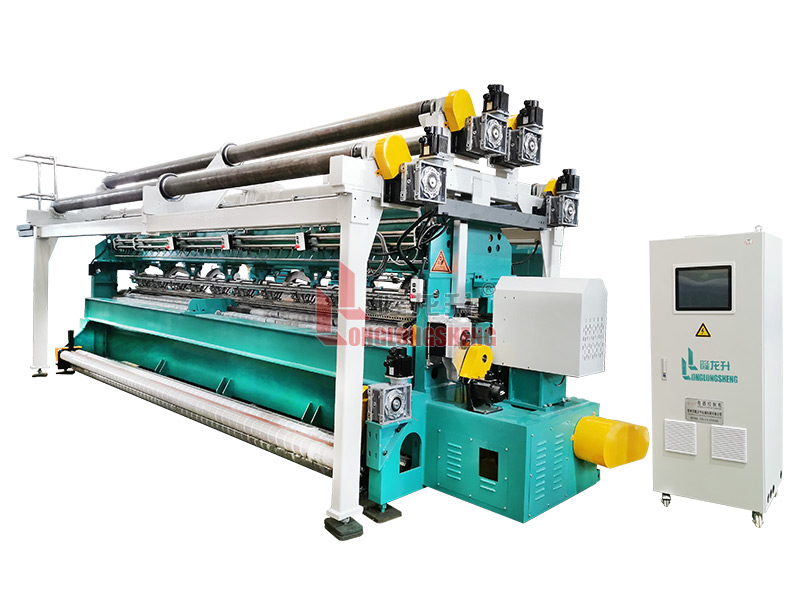
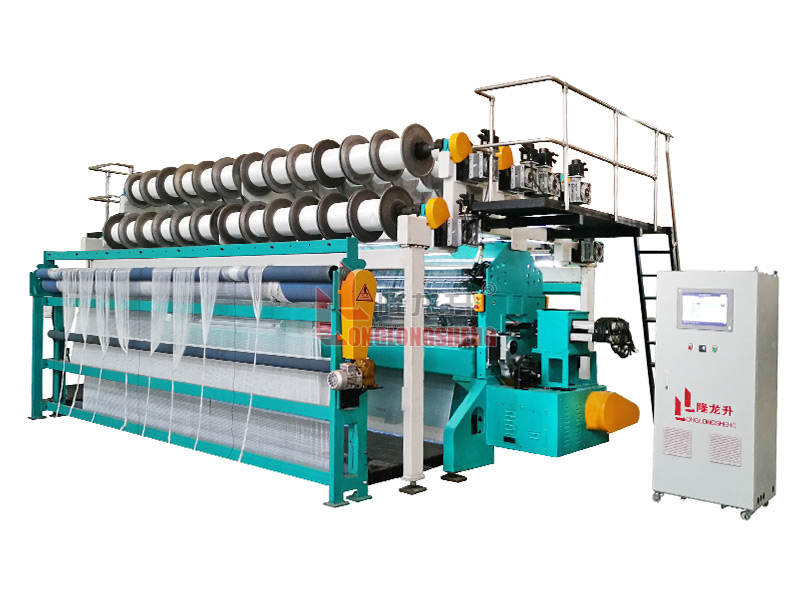
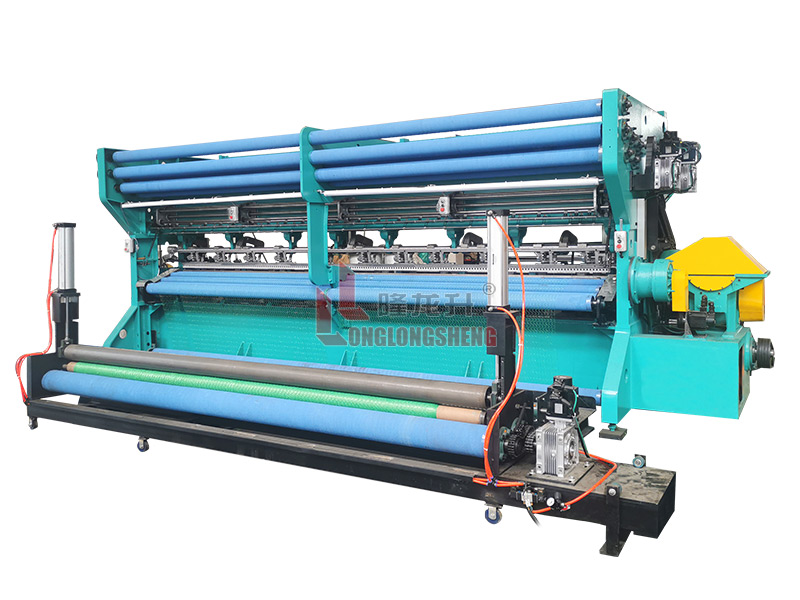
LongLongSheng provides warp knitting machinery for different netting applications. When evaluating a fishing net production project, the required mesh structure, yarn specifications and finished product dimensions should be considered together to identify an appropriate machine solution.
Mesh size and mesh opening describe different dimensions. Stretched mesh size is commonly measured between the centres of two opposite knots in a fully extended knotted mesh, while mesh opening refers to the clear internal space. The two measurements should not be used interchangeably.
No. The appropriate mesh size depends on the target species, fishing method, net design and applicable regulations. A larger mesh may allow smaller fish to escape in certain fishing applications, but it is not suitable for every type of fishing gear.
For conventional diamond-shaped knotted netting, stretched mesh size is commonly measured between the centres of two opposite knots while the mesh is fully extended in the specified direction. Always confirm the measurement convention before comparing specifications.
Yes. Yarn thickness can affect the clear space inside a mesh. Two netting products with similar nominal mesh dimensions may have different mesh openings if their yarn thicknesses or structures differ.
The range of mesh structures and dimensions that a machine can produce depends on its design, configuration, yarn characteristics and knitting settings. Not every machine can produce every mesh specification. Manufacturers should confirm the required product specifications with the equipment supplier.
It is recommended to provide the mesh structure, mesh dimensions, measurement method, yarn material, yarn thickness, fabric width, net length and intended application. If possible, provide a physical sample or technical drawing to reduce misunderstandings.
Fishing net mesh size is a key specification that affects net structure, application suitability and manufacturing requirements. Understanding the differences between bar length, stretched mesh size and mesh opening is essential for accurate communication between net manufacturers, equipment suppliers and buyers.
When selecting mesh specifications, manufacturers should consider the target application, yarn properties, mesh geometry, regulatory requirements and production process together.
For fishing net producers planning to purchase or upgrade equipment, clearly defining the required net structure and finished product specifications is an important first step toward choosing suitable warp knitting machinery.
Next: None
Learn about fishing net mesh types, measurement methods and selection factors for commercial fishing, aquaculture and net…
How are knotless fishing nets manufactured? Explore the Raschel warp knitting process, materials, production steps, qual…
Learn how LongLongShengs GE2820 warp knitting machine is being evaluated for drone interception net production, including…