LONGLONGSHENG machine - Warp knitting machine China Suppliers
Mobile Browse


Sources: | Release date: 2026-08-22 13:53:11 | View: 2052
Abstract:
Learn about the SG2319TL shade net warp knitting machine, including working width, gauge, speed, yarn systems, applications and customization.
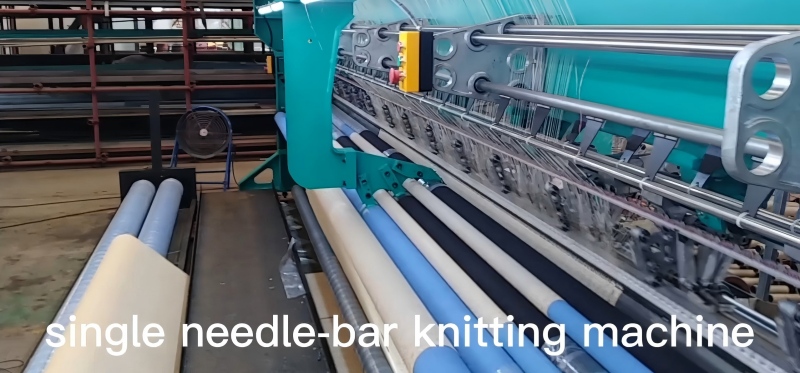
The SGE2319TL Single Needle-bar Warp Knitting Machine is a high-performance Raschel warp knitting machine designed for producing a wide range of net fabrics, including shade nets, protective nets, fishing nets, purse nets, olive nets, and garment nets.
The machine uses a latch needle knitting system, oiled eccentric gearing, and a 3-roller positive yarn let-off system. It supports multiple machine gauges, 2–5 guide bars, and working widths from 150 inches to 532 inches, making it suitable for different net production requirements.
This FAQ explains the SGE2319TL's applications, working principle, technical specifications, available configurations, production considerations, and maintenance requirements.
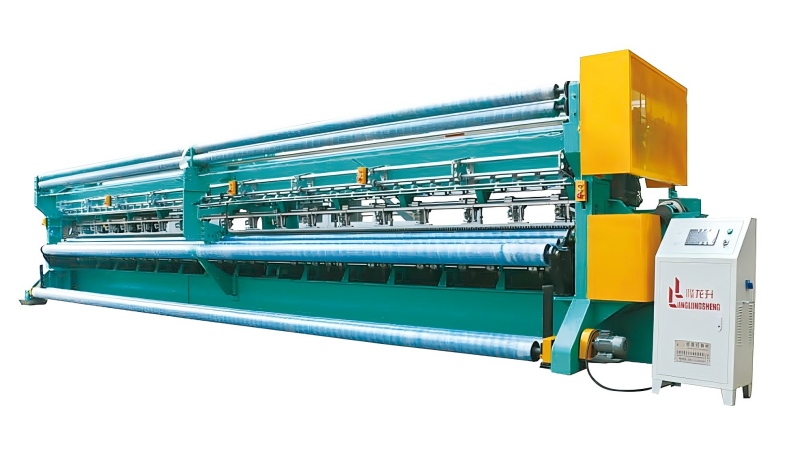
The SGE2319TL is a single needle-bar Raschel warp knitting machine developed for continuous production of various net fabrics.
Unlike conventional weft knitting, warp knitting uses multiple warp yarns fed into the knitting elements simultaneously. The guide bars move the yarns around the latch needles according to the selected lapping pattern, forming interconnected loops that create the final mesh structure.
The SGE2319TL is particularly suitable for manufacturers producing wide-width net fabrics. Its configuration can be selected according to the required mesh structure, yarn specification, working width, and production application.
Typical applications include:
· Protective nets
· Purse nets
· Other industrial and agricultural net fabrics
The SGE2319TL is designed for flexible net production rather than a single fixed product.
For shade net manufacturers, the machine can be configured to produce different mesh structures and widths according to the intended application.
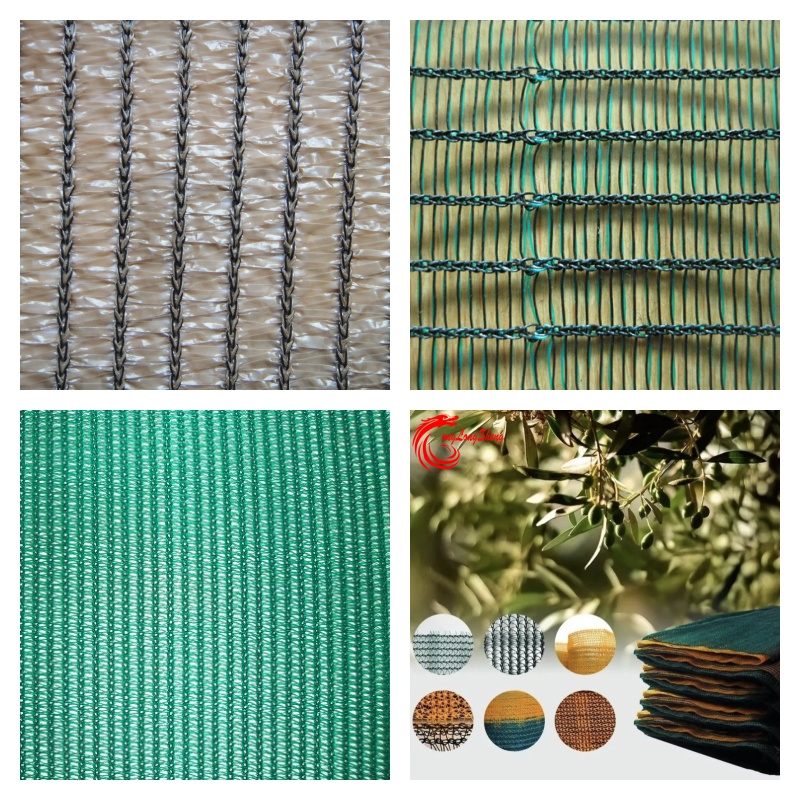
Shade nets are widely used in agriculture, horticulture, nurseries, greenhouses, and outdoor applications where controlled sunlight and environmental protection are required.
Protective nets can be used in agricultural, construction, industrial, and other applications where physical protection or separation is required.
The machine can also be used for producing knotless fishing nets when the appropriate yarn, gauge, guide bar configuration, and knitting pattern are selected.
The machine's flexible Raschel knitting structure allows it to produce various open mesh and net constructions used for different industrial and commercial applications.
The SGE2319TL produces shade nets through a continuous warp knitting process.
The basic production process is:
Warp Yarn Preparation → Yarn Feeding → Guide Bar Movement → Loop Formation → Mesh Structure Formation → Fabric Take-Down → Fabric Batching
The warp yarns are supplied to the knitting area through the yarn feeding system. The guide bars move the yarns around the latch needles according to the programmed or selected lapping pattern.
The needles then form interconnected loops. The arrangement and movement of the yarns determine the final mesh structure of the fabric.
After knitting, the finished net is continuously taken down and wound or batched by the fabric batching system.
The final characteristics of the shade net depend on several factors, including:
· Yarn material
· Yarn specification
· Machine gauge
· Number of guide bars
· Lapping pattern
· Machine speed
· Working width
· Fabric take-down settings
Therefore, producing a specific shade net requires matching the machine configuration to the target product rather than relying on machine speed alone.
The SGE2319TL combines several mechanical and yarn-control systems designed for continuous net production.
The SGE2319TL uses an oiled eccentric gearing system to drive the knitting elements. The drive system coordinates the movement of the knitting components during operation and is designed for continuous industrial production. Stable movement of the knitting elements is important for maintaining consistent loop formation and fabric structure.
The machine is equipped with a 3-roller positive yarn let-off system. The positive let-off system provides controlled yarn feeding to the knitting area. Stable yarn delivery helps reduce variations in yarn supply and supports consistent mesh formation.
The SGE2319TL uses latch needles for loop formation. According to the machine configuration, the needles can be mounted on the needle bed in blocks or inserted separately.
Different fabric batching configurations are available for the SGE2319TL, including:
· 2 rollers with friction drive
· 4 rollers with friction drive
· Center shaft drive
· Separately standing configurations
The appropriate batching configuration can be selected according to the finished net, production requirements, and downstream handling process.
The appropriate yarn material depends on the target net and required product characteristics.
Common synthetic materials used in net production may include:
· HDPE
· PP
· Polyester
· Nylon
· Other suitable synthetic yarns
However, yarn compatibility should always be evaluated according to the specific machine configuration and production requirements.
Before selecting a machine, manufacturers should confirm:
• Yarn material
• Yarn count or denier
• Filament structure
• Yarn strength
• Yarn elongation
• Yarn diameter
• Required mesh size
• Required net weight
• Required shading or openness
The main technical specifications of the SGE2319TL include the following:
|
Parameter |
Specification |
|
Machine Type |
Single Needle-bar Raschel Warp Knitting Machine |
|
Needle Type |
Latch Needle |
|
Machine Gauge |
E1, E2, E6, E9, E12, E14, E16 |
|
Number of Guide Bars |
2–5 |
|
Working Width |
150", 180", 220", 260", 348", 434", 532" |
|
Machine Speed |
200–450 rpm |
|
Yarn Let-Off |
3-Roller Positive Yarn Let-Off |
|
Main Drive |
Oiled Eccentric Gearing |
|
Fabric Batching |
2-Roller / 4-Roller Friction Drive or Center Shaft Drive |
The SGE2319TL is available in multiple working widths:
|
Working Width |
Approximate Metric Width |
|
150" |
3,810 mm |
|
180" |
4,572 mm |
|
220" |
5,588 mm |
|
260" |
6,604 mm |
|
348" |
8,839 mm |
|
434" |
11,024 mm |
|
532" |
13,513 mm |
The maximum listed working width is 532 inches, approximately 13.5 meters.
A wider machine can be advantageous for manufacturers producing wide net fabrics because it can reduce the need for multiple narrow production lanes. However, working width should be selected according to the actual finished-product width, factory layout, production volume, fabric batching method, and downstream processing requirements.
The SGE2319TL supports multiple machine gauges: E1, E2, E6, E9, E12, E14, and E16. The machine can also be configured with 2–5 guide bars.
Machine gauge and guide bar configuration influence the structure and characteristics of the finished net.
When selecting the configuration, manufacturers should consider:
· Yarn specification
· Mesh size
· Net density
· Net weight
· Mesh structure
· Required strength
· Pattern requirements
· Target application
There is no single gauge that is best for every type of net. The correct gauge should be selected according to the finished product.
The listed machine speed of the SGE2319TL is approximately 200–450 rpm.
However, machine speed should not be considered the same as actual production output.
Actual output can be affected by:
· Working width
· Machine gauge
· Yarn type
· Yarn specification
· Mesh structure
· Lapping pattern
· Machine speed
· Production efficiency
· Machine downtime
· Operator experience
For this reason, manufacturers should evaluate the expected output based on the specific net specification instead of comparing machines only by their maximum rpm.
Yes. The SGE2319TL is designed as a flexible single needle-bar Raschel machine for various net applications.
Depending on the selected configuration, it can be used for products such as:
· Shade nets
· Protective nets
· Fishing nets
· Purse nets
· Olive nets
· Garment nets
· Other open-mesh fabrics
Different products may require different combinations of yarn, gauge, guide bars, lapping patterns, and machine settings.
Single needle-bar Raschel machines can differ significantly in their configuration even when they have similar names or applications.
Important differences may include:
· Working width
· Machine gauge
· Number of guide bars
· Yarn let-off system
· Drive system
· Fabric batching system
· Machine speed
· Automation
· Supported yarn types
· Target applications
The SGE2319TL combines oiled eccentric gearing, a 3-roller positive yarn let-off system, multiple gauge options, 2–5 guide bars, and wide working widths up to 532 inches.
This combination makes it suitable for manufacturers looking for a flexible machine platform for different net production requirements.
Choosing the right configuration starts with the finished net rather than the machine itself.
First determine what you plan to produce, such as shade net, fishing net, protective net, agricultural net, sports net, or other technical mesh.
The yarn should be defined before finalizing the machine configuration. Important factors include material, yarn count, denier, filament structure, strength, elongation, and diameter.
Select the working width based on the finished net width and planned production capacity. The factory should also have sufficient space for machine installation, yarn preparation, operation, maintenance, and finished-fabric handling.
The machine gauge should match the yarn and required mesh structure. A finer gauge is not automatically better.
The SGE2319TL supports 2–5 guide bars. The required number depends on the target knitting structure and lapping pattern.
The batching system should be selected according to the finished net and production requirements.
Consider how the knitting machine will connect with yarn preparation, warping, fabric handling, inspection, folding, and packaging processes.
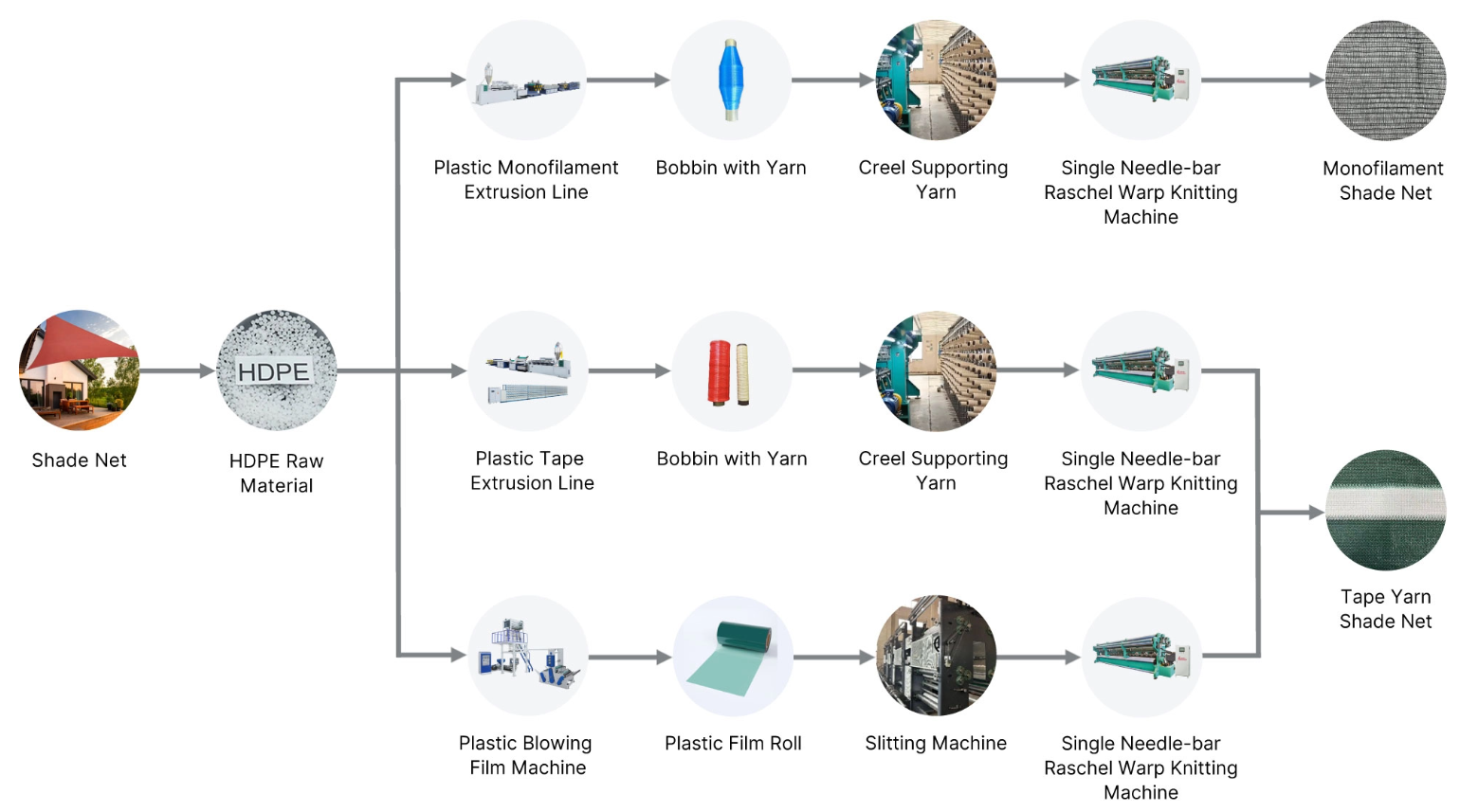
The warp knitting machine is the core equipment responsible for forming the shade-net structure, but a complete production line may include several additional processes.
A typical production flow can be:
Raw Material Preparation → Yarn Preparation → Warping → Warp Knitting → Fabric Batching → Inspection → Folding → Packaging
Depending on the production method, additional processes such as extrusion, tape-yarn production, slitting, stretching, or other yarn preparation may also be required.
Regular maintenance is essential for maintaining stable machine performance and consistent net quality.
Operators should regularly inspect:
· Knitting needles
· Guide bars
· Yarn guides
· Yarn feeding rollers
· Let-off system
· Eccentric gearing
· Lubrication system
· Fabric batching system
· Drive components
· Electrical components
· Control system
· Machine fasteners
The lubrication condition of the eccentric gearing should receive particular attention because stable lubrication is important for the operation of the mechanical drive system.
The exact maintenance interval should follow the manufacturer's technical documentation and actual operating conditions.
Yes. The SGE2319TL is a single needle-bar Raschel warp knitting machine designed for producing shade nets and other net fabrics.
Yes. Fishing nets are among the listed applications of the SGE2319TL. The specific machine configuration should be selected according to the fishing-net structure, yarn, mesh size, and production requirements.
The maximum listed working width is 532 inches, approximately 13,513 mm or 13.5 meters.
The listed machine speed is approximately 200–450 rpm. Actual production output depends on product structure, yarn, working width, gauge, machine settings, and production efficiency.
The SGE2319TL can be configured with 2–5 guide bars.
The SGE2319TL uses latch needles. The needles can be mounted on the needle bed in blocks or inserted separately according to the machine configuration.
The available machine gauges listed for the SGE2319TL are E1, E2, E6, E9, E12, E14, and E16.
The SGE2319TL is available with multiple working widths, gauges, guide bar configurations, and fabric batching options. The appropriate configuration can be selected according to the customer's target product and production requirements.
Production output is influenced by machine width, machine speed, gauge, yarn specification, mesh structure, lapping pattern, fabric take-down settings, production efficiency, and downtime.
Consider the target net type, yarn material and specification, required mesh structure, finished net width, production capacity, machine gauge, guide bars, batching method, factory space, and technical support.
LongLongSheng focuses on warp knitting machinery and net production solutions for different industrial and textile applications.
For shade-net manufacturers, the SGE2319TL provides a flexible combination of wide working widths, multiple gauges, 2–5 guide bars, positive yarn let-off, and different fabric batching configurations.
The equipment can be evaluated according to the customer's specific requirements for shade nets, fishing nets, protective nets, and other mesh products.
When planning a new production line or upgrading existing equipment, selecting the right machine configuration at the beginning can help improve production efficiency and reduce unnecessary equipment adjustments later.
LongLongSheng GE2816 double needle-bar warp knitting machine for knotless fishing nets & safety nets. Check specs, sp…
Learn everything about the HSGE2320-4 High Speed Warp Knitting Machine, including applications, specifications, maintenan…
Find answers to the most frequently asked questions about the LongLongSheng HSGE2320B High Speed Bale Net Machine. Learn …