LONGLONGSHENG machine - Warp knitting machine China Suppliers
Mobile Browse


Sources: Longlongsheng | Release date: 2026-10-28 16:53:18 | View: 7930
Abstract:
Explore LongLongSheng’s GE2812J(RDJ) jacquard double needle-bar warp knitting machine, technical options, fabric applications and configuration guidance.
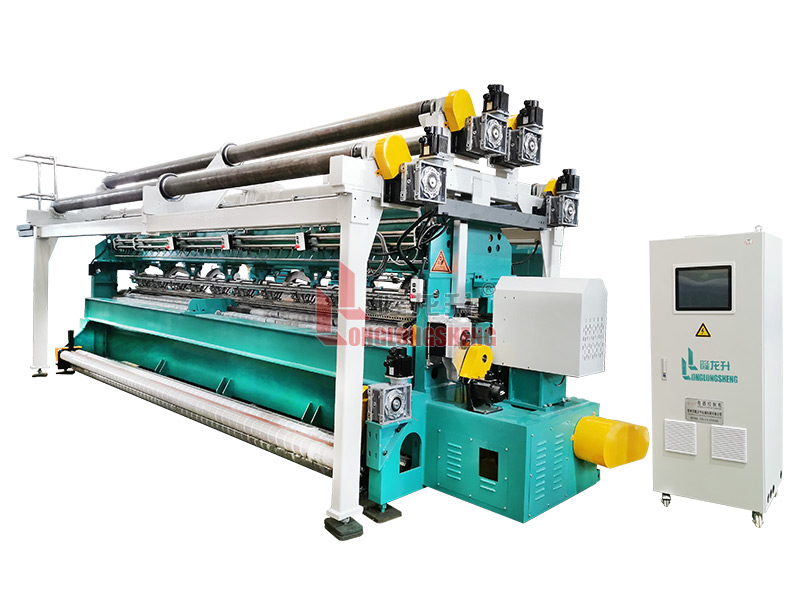
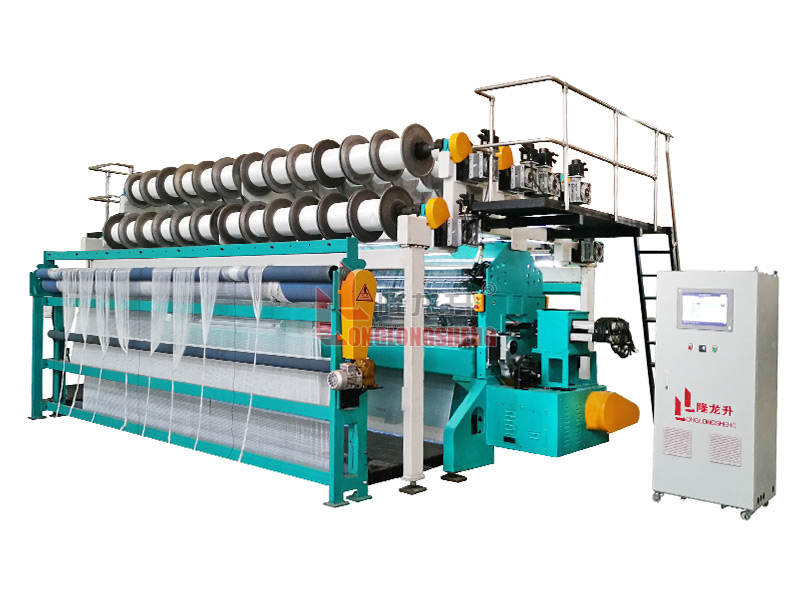
Changzhou LongLongSheng Warp Knitting Machinery Co., Ltd. introduces the GE2812J(RDJ) High-Speed Jacquard Double Needle-bar Warp Knitting Machine for manufacturers developing patterned mesh, three-dimensional spacer fabrics and plush textiles. Combining a double needle-bar structure with configurable jacquard arrangements, electronic beam control and electronic fabric take-up, the machine is designed to support a range of fabric-development projects. Its published application areas include suitable footwear materials, automotive interior textiles and bag mesh. The right configuration depends on the target fabric, yarn, pattern and production requirements, so sample development and technical discussion are important steps before investment.
The GE2812J(RDJ) is a double needle-bar warp knitting machine with jacquard capability. In warp knitting, multiple yarns are supplied in parallel and formed into interconnected loops along the length of the fabric. A double needle-bar arrangement makes it possible to form two fabric surfaces and connect them through the knitting structure, enabling the development of three-dimensional textiles such as spacer fabrics. The actual thickness, connecting structure, surface appearance and performance depend on the knitting pattern, yarn selection, machine settings and finishing process.
The jacquard function adds patterning possibilities to the base fabric structure. Rather than treating the machine as a general-purpose unit for every knitted product, it is more accurate to view the GE2812J(RDJ) as equipment for selected structured fabrics where double needle-bar construction and jacquard effects are relevant. Manufacturers can assess whether the machine is suitable by comparing a target fabric sample or design drawing with the machine’s available gauge, guide-bar and jacquard options.
For buyers evaluating a new warp knitting machine, the model name is only the starting point. The important questions are what fabric must be produced, which structure is required, how wide the fabric needs to be, what yarns will be used and what level of pattern variation is expected. Answering these questions first makes discussions about configuration more efficient and reduces the risk of selecting a machine based on a single headline specification.
The published GE2812J(RDJ) configuration offers one or two jacquard bars. This flexibility allows the machine setup to be considered in relation to the intended design and fabric construction. A single-jacquard-bar arrangement may be appropriate for some pattern requirements, while a two-bar arrangement can offer other patterning possibilities. The correct choice is not determined by the number of bars alone: the design repeat, placement of patterned areas, yarn plan, guide-bar arrangement and desired fabric surface must all be considered together.
Before choosing a configuration, prepare a clear description of the intended fabric. Useful references include a physical sample, a technical drawing, a pattern image, a target fabric thickness and the intended end use. If the design requires patterned openings, different surface effects or a specific relationship between the two fabric faces, share those details with the machine supplier. A sample trial is the most practical way to assess whether the proposed setup can produce the required result.
The GE2812J(RDJ) uses an electronic beam control (EBC) yarn let-off system. Yarn let-off is a critical part of warp knitting because the amount of yarn supplied influences loop formation and fabric construction. Electronic control can help regulate yarn delivery in accordance with the selected process settings. In production, however, fabric consistency also depends on beam preparation, yarn characteristics, machine condition, correct threading, pattern settings and operator practice.
For this reason, EBC should be understood as one component of the production system rather than a guarantee of a particular fabric result. Buyers should discuss yarn type, yarn count, beam arrangement, required tension behaviour and the planned fabric structure when assessing a machine. These details help the technical team understand how the machine is expected to operate under the intended production conditions.
The machine is equipped with electronically controlled fabric take-up. Take-up removes the knitted material from the knitting area at a controlled rate. Its settings need to match the knitting process and the structure being produced. If take-up and knitting conditions are not properly coordinated, the resulting fabric may differ from the intended density, thickness or appearance. During sample development, the operator should review take-up settings alongside yarn delivery, pattern and other knitting parameters.
The published equipment description also lists a separate batching device consisting of two rollers with friction drive. Take-up and batching perform related but distinct roles in fabric handling: one controls fabric removal from the knitting zone, while the other collects the produced material. Buyers should confirm the exact delivery arrangement and any project-specific requirements with LongLongSheng before ordering.
Published gauge options are E20, E22, E24 and E28. The listed guide-bar configurations range from five to eight bars, depending on the machine setup. Gauge affects the spacing of the needles and is one factor influencing the fabric’s construction and appearance. Guide-bar arrangements determine how yarns are guided into the knitting elements and therefore contribute to the structures that can be developed. These settings should be selected together, not as isolated specifications.
A finer gauge is not automatically the best choice, and a higher number of guide bars does not automatically make a machine suitable for every design. The selection should follow the target fabric, yarn properties, desired surface, structural requirements and production plan. A supplier can give more relevant guidance when the buyer provides a sample or a clear technical brief rather than only naming a finished product category.
The published trick plate distance is continuously adjustable from 1 to 6 mm. This adjustment is relevant when developing fabrics with different structural depths. The appropriate setting depends on the target construction and must be assessed with the selected yarn, pattern and other machine parameters. It should not be interpreted as a guarantee that every thickness within the stated range will be suitable for every fabric design.
When reviewing this feature, define the target fabric thickness and the required relationship between the two fabric surfaces. If the fabric is intended for footwear or another application where cushioning, flexibility or air space matters, assess the sample in its finished form as well as directly off the machine. Finishing, lamination, cutting and other downstream operations can change the behaviour of the final material.
The following figures are published for the GE2812J(RDJ). Buyers should confirm the latest specification sheet, included equipment and available options with LongLongSheng before placing an order.
|
Working needles |
Latch needle or embedded-latch needle |
|
Machine gauge |
E20, E22, E24, E28 |
|
Nominal working width |
138 in (3,500 mm) or 210 in (5,334 mm) |
|
Guide bars |
5, 6, 7 or 8, depending on configuration |
|
Jacquard bars |
1 or 2 |
|
Yarn let-off |
Electronic Beam Control (EBC) |
|
Pattern device |
Pattern disc and EL system |
|
Trick plate distance |
Continuously adjustable, 1–6 mm |
|
Fabric take-up |
Electronic control |
|
Batching device |
Two rollers with friction drive, separate-standing arrangement |
|
Main motor |
5.5 kW, frequency-converter controlled |
|
Published machine speed |
200–600 r/min |
|
Warp beam sizes |
21 in or 30 in |
The published speed range is a machine specification, not a promise of a fixed fabric output. Actual production depends on the selected pattern, gauge, yarn, fabric structure, operating settings, machine condition and production environment. Similarly, nominal working width describes the machine’s stated width option; usable fabric width and edge treatment should be confirmed for the intended construction. A technical quotation should identify the agreed configuration rather than relying on a general model description.
Three-dimensional spacer fabrics are constructed with two fabric surfaces connected by yarns or knitted elements that create a space between them. Depending on design, these fabrics can combine a distinctive surface with a degree of thickness, resilience or air movement. Jacquard patterning can introduce visual variation and patterned areas, giving designers more options than a uniform mesh alone. The final performance depends on the full fabric construction, not simply on the machine type.
For manufacturers, the design process should begin with the required fabric function. Is the priority an open mesh, a particular visual pattern, a defined thickness, a soft hand, dimensional stability or compatibility with a later bonding process? These goals can lead to different yarn and machine settings. Sample evaluation should include the fabric’s appearance, thickness, weight, stretch behaviour, recovery and response to the planned finishing steps.
Footwear is a stated application area for the GE2812J(RDJ). Warp-knitted mesh and spacer materials are used in shoe development when designers want to combine visual texture with properties such as flexibility, low weight or air permeability. Jacquard patterning can create distinctive surface arrangements and help differentiate a material’s appearance. Depending on the design, the knitted textile may become part of a shoe upper or another suitable footwear component after cutting and further processing.
A machine purchase should not be based on the assumption that all shoe uppers share the same construction. Performance footwear, casual shoes and fashion footwear can have different requirements for support, abrasion resistance, stretch, breathability, thickness and bonding. The buyer should therefore provide the target material or design reference and define the properties that matter most. Tests on finished samples are needed to check whether the knitted fabric meets the actual footwear specification.
The sample image supplied for this article shows a shoe-related textile application. Place it near this subsection to help readers connect the machine’s potential application with a recognisable end-use material. The caption and alt text should describe what is visible without implying that the pictured shoe was manufactured entirely on this machine or that the fabric meets a performance standard that has not been verified.
Suitable automotive interior textiles are another potential application area listed for the machine. Interior components may require a particular appearance, surface texture, dimensional stability and compatibility with lamination or assembly processes. A jacquard spacer structure may be worth evaluating where the design brief calls for a structured textile surface, but the exact suitability depends on the component and its performance requirements.
Automotive projects usually involve more than visual inspection. Buyers may need to consider abrasion, colour fastness, ageing, dimensional change, flammability requirements, odour, cleaning methods and compatibility with backing materials. These requirements vary by application and market. The machine itself does not certify the finished textile; the fabric and downstream process must be tested against the relevant customer specification. Confirm the required standards and testing plan before treating a sample as production-ready.
The product information also identifies bag mesh as a potential application. Depending on the product, bag textiles may need open areas, visible patterns, flexibility, dimensional stability or a particular balance between strength and weight. Jacquard patterning may help create a recognisable surface design, while the double needle-bar structure supports the development of selected three-dimensional constructions.
For bag applications, evaluate the fabric in relation to the load, abrasion, seam construction, edge finishing and any coating or lamination that will be used. A textile that looks suitable as a flat sample may behave differently after cutting, sewing or attachment to other components. A trial should therefore reproduce the important stages of the intended manufacturing route wherever practical.
The supplied images also show socks, gloves and a seamless-style garment. These images can help illustrate the broader variety of knitted textiles, but they should not be presented as proof that the GE2812J(RDJ) directly manufactures each finished product. Socks, gloves and seamless apparel commonly involve different machine types, knitting processes or additional production stages. Their inclusion in the article should be treated as a related-textile gallery only unless the company confirms the exact production route.
For a product announcement, accurate application claims are more valuable than an extensive list of unrelated end products. Keep the main application discussion centred on jacquard mesh, spacer fabrics, footwear materials, suitable automotive interiors and bag mesh. If the company later verifies a specific application for socks, gloves or seamless garments, that information can be added with a clear explanation of the required machine configuration and process.
Begin with the fabric rather than the machine specification. Identify the intended end use, target width, thickness, surface pattern, mesh openness, hand feel and any functional properties. If a reference sample is available, send it to the supplier. If no sample exists, provide a drawing, image, measurement sheet or a detailed written description. Clear requirements make it easier to assess whether the GE2812J(RDJ) is a suitable starting point.
Yarn type and properties influence loop formation, fabric weight, surface appearance and finished performance. Share the planned fibre type, yarn count or linear density, filament characteristics and any elastic yarn requirements. If several yarns will be used in one fabric, identify their roles in the construction. Do not assume that a yarn used successfully on another machine will produce the same result without adjustment on a different setup.
Use the intended fabric construction to guide the choice of gauge and guide-bar arrangement. Discuss whether the pattern calls for one or two jacquard bars and how the ground structure supports the design. The number of bars should be selected for the knitting plan, not simply because the highest available number appears more advanced. Ask the supplier to confirm the proposed arrangement against the target sample and expected production method.
The published nominal widths are 138 inches (3,500 mm) and 210 inches (5,334 mm). Choose the width according to the fabric format, cutting plan, target output and factory layout. Wider is not always better if the product plan does not use the available width efficiently. Confirm the actual usable width, beam arrangement, machine footprint, access for threading and maintenance, and site utilities before finalising the installation plan.
A sample trial gives the buyer and supplier a shared reference for evaluating the proposed configuration. Review surface appearance, pattern definition, thickness, weight, dimensions, stability and handle. If the textile will be used in footwear, automotive interiors or another technical application, include relevant performance tests and downstream processing. Record the successful settings and material details so the sample can guide subsequent production planning.
The GE2812J(RDJ) has a published machine speed range of 200–600 r/min. Machine speed is only one factor in productivity. A fabric with a complex pattern, a demanding structure or strict quality requirements may need settings that differ from those used for a simpler construction. Yarn preparation, beam changes, threading, pattern setup, inspection, planned maintenance and downstream handling also influence the amount of saleable fabric produced over a shift.
When estimating production capacity, distinguish between nominal machine speed, running time, actual knitting output and accepted finished output. A realistic production plan accounts for setup time, stops, fabric inspection, rejected material and any finishing or conversion operations. Ask the supplier which production assumptions are appropriate for the target fabric and validate the estimate during sample development or a controlled production run. Avoid comparing machines solely by their maximum speed figures when their configurations and intended fabrics differ.
Factory readiness also matters. Confirm the machine’s dimensions, weight, power requirements, foundation or floor loading, access routes and space for operators to work safely. The published main motor is 5.5 kW with frequency-converter control, but total site requirements should be confirmed from the final electrical documentation. Installation planning should include safe access to the upper beam area, routine cleaning points, yarn handling and a clear maintenance route around the machine.
Consistent fabric production depends on more than the initial machine purchase. Operators should follow the supplier’s maintenance schedule, use the recommended lubricants and replacement parts, keep the knitting area clean and check machine components at the specified intervals. Needle condition, yarn guides, drive elements, take-up rollers and other wear-sensitive components can influence fabric quality. Any maintenance procedure must follow the official manual and site safety requirements.
A repeatable production process should document the yarn lot, beam preparation, threading plan, pattern file or disc information, key machine settings, sample approval and quality checks. When a defect appears, records help the team determine whether the issue is related to yarn, machine settings, a component, pattern preparation or downstream handling. Changing several variables at once makes it harder to identify the cause, so controlled adjustments and clear records are preferable.
Training is equally important. Operators need to understand the machine’s controls, threading sequence, safe access procedures, start-up and shutdown routines, and how to identify abnormal operation. The exact training and service arrangements should be confirmed with LongLongSheng during the quotation and delivery process. Do not assume that a machine specification alone defines the scope of installation, commissioning or after-sales support.
Changzhou LongLongSheng Warp Knitting Machinery Co., Ltd. manufactures warp knitting machinery for mesh and other textile applications. The GE2812J(RDJ) adds a jacquard double needle-bar option for manufacturers exploring structured mesh, spacer and plush fabrics. Its published configuration options provide a starting point for discussing the needs of a specific textile project rather than forcing every application into one fixed setup.
A productive technical discussion begins with information about the intended fabric. LongLongSheng can assess a request more effectively when the buyer shares the application, a fabric sample or drawing, yarn details, target working width, required structure and any known test criteria. These details help establish which machine options need to be discussed and what should be verified through sample knitting before a production decision is made.
For buyers comparing equipment, the most useful next step is not simply to request a price. Ask for confirmation of the configuration, the applicable technical data, included equipment, installation requirements, expected sample-development process and any service arrangements relevant to the project. Written confirmation helps both sides align expectations before an order is finalised.
It is intended primarily for three-dimensional jacquard mesh and plush fabrics. Published application areas include suitable footwear materials, automotive interior textiles and bag mesh. The suitability of a particular fabric must be confirmed against its structure, yarn and performance requirements.
Yes. The published specification lists one- and two-jacquard-bar options. The appropriate arrangement depends on the desired pattern, fabric structure and knitting plan. Share a sample or drawing so the configuration can be evaluated against the intended result.
The published options are E20, E22, E24 and E28. The appropriate gauge depends on the required fabric construction, yarn and appearance. Confirm availability for the specific configuration before ordering.
The published nominal working widths are 138 inches (3,500 mm) and 210 inches (5,334 mm). Confirm the required usable width and final machine arrangement with the supplier.
The published speed range is 200–600 r/min. Actual production output varies with the fabric, pattern, yarn, operating settings, machine condition and production conditions. The maximum figure should not be treated as a guaranteed output rate.
The available machine information does not establish that it directly produces those finished products. Such items may require different knitting machinery or additional processes. Confirm the production route before attributing them to the GE2812J(RDJ).
Provide the target application, fabric sample or drawing, yarn details, required width, desired structure, expected production needs and any relevant quality criteria. Also identify which specifications are mandatory and which can be discussed. This allows the supplier to respond with a more relevant configuration proposal.
Yes. Sample evaluation helps check the fabric’s pattern, dimensions, thickness, handle and performance against the target requirements. If the fabric will undergo lamination, cutting, sewing or other finishing, include those stages in the assessment where practical.
The GE2812J(RDJ) Jacquard Double Needle-bar Warp Knitting Machine is a configurable option for manufacturers developing jacquard mesh, three-dimensional spacer and plush fabrics. To assess its suitability for your project, prepare a fabric sample or design reference, yarn information, required width and application details. Contact Changzhou LongLongSheng Warp Knitting Machinery Co., Ltd. to confirm current specifications, discuss available configurations and identify the next steps for sample development.
A practical development workflow connects design, machine setup, trial production and final evaluation. First, the product team defines the textile’s function and appearance, then prepares a construction plan and selects candidate yarns. The machine configuration is reviewed against that plan, including gauge, guide bars, jacquard arrangement, working width and trick plate distance. Once the setup is agreed, a controlled sample run allows the team to review the fabric and identify adjustments before committing to a larger production schedule.
During the trial, record both the visual result and the settings used to achieve it. Useful observations include pattern definition, open-area placement, thickness, weight, width, surface uniformity, edge behaviour and any visible defects. If the sample does not meet expectations, change parameters systematically and document the result of each trial. A structured approach is more useful than relying on memory, especially when several yarns, pattern variants or machine settings are being evaluated.
After the fabric is approved, review the downstream route. Cutting, sewing, bonding, coating, heat treatment and other finishing processes can affect the final material. The approved knitted sample should therefore be assessed in the form closest to the actual end product, not only as an unfinished roll. This is particularly important for footwear and automotive applications, where the textile may need to meet a customer specification after conversion or assembly.
Before finalising a purchase, confirm the configuration in writing. The order documentation should identify the model, working width, gauge, number of guide bars, jacquard-bar arrangement, needle type, yarn let-off system, take-up and batching equipment, motor and control arrangement, and any optional equipment. If a particular patterning function or fabric construction is essential, state it explicitly and ask the supplier to confirm that the proposed configuration addresses it.
Also discuss delivery scope and site preparation. Clarify what is included in the machine package, which utilities are required, what foundation or floor conditions are recommended, how the machine will be moved into the factory and what space is needed for operation and maintenance. Agree on documentation, training, commissioning and technical support arrangements before the machine arrives. These details are project-specific and should be confirmed rather than inferred from general marketing information.
Finally, align the acceptance process with the intended fabric. If the purchase depends on a particular sample, identify the sample characteristics and evaluation method in advance. Agree which factors will be reviewed, how results will be recorded and which party will provide the yarn and pattern information. A clearly defined evaluation process helps turn a general equipment enquiry into a practical manufacturing project.
Next: None
Explore LongLongSheng’s GE2812J(RDJ) jacquard double needle-bar warp knitting machine, technical options, fabric applica…
Meet LongLongSheng at ITMA ASIA + CITME 2026 in Shanghai, November 20–24. Visit booth H4.1A22 to explore warp knitting m…
Discover LongLongShengs GE2815 warp knitting machine for tubular nets and flexible bag fabrics, featuring 8 guide bars an…