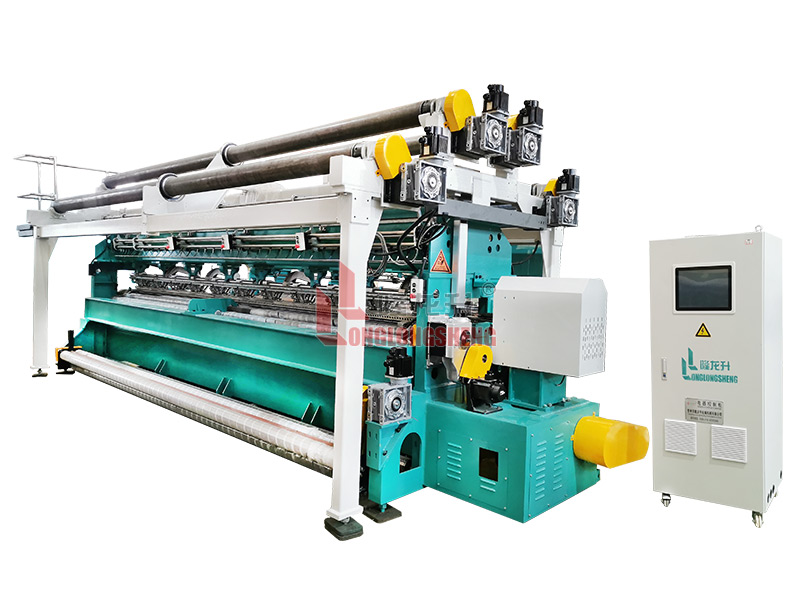
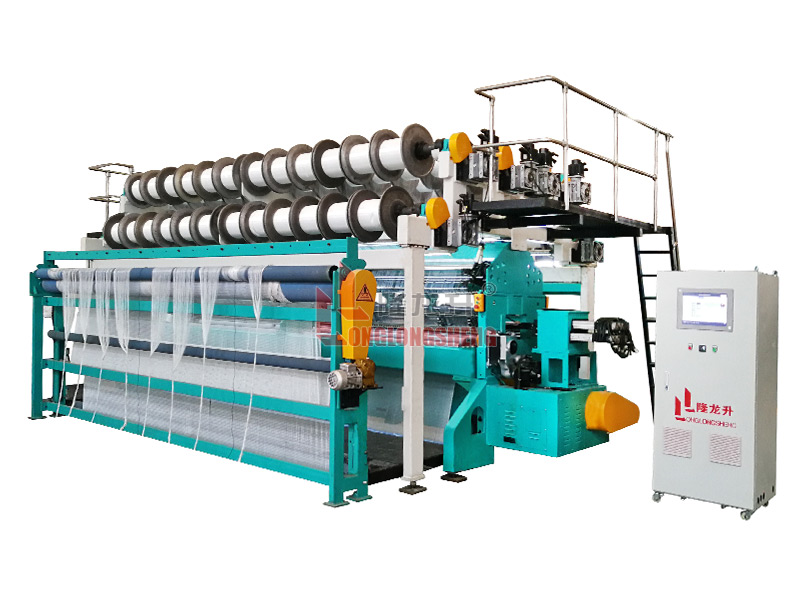
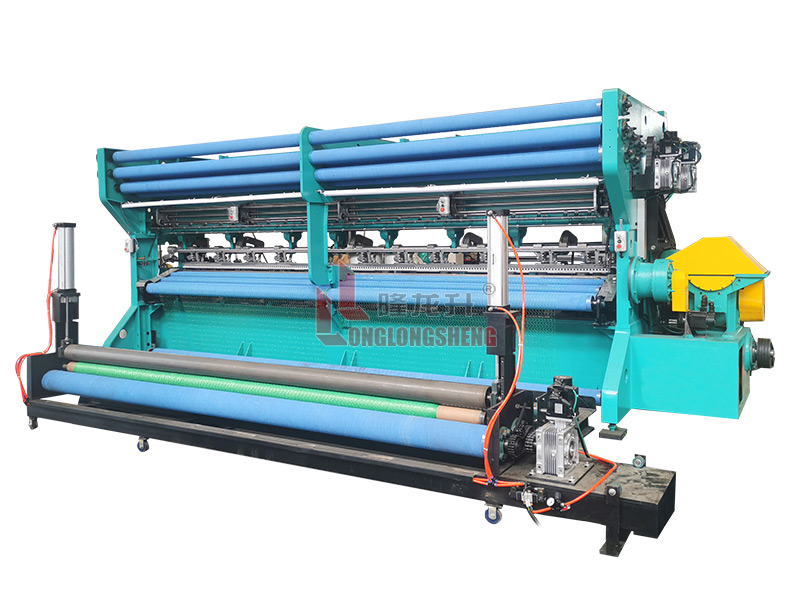
LONGLONGSHENG machine - Warp knitting machine China Suppliers
Mobile Browse


Sources: | Release date: 2026-10-09 17:13:12 | View: 769
Abstract:
Explore GE2820 warp knitting machine specifications, net applications, configuration options, production factors, and buyer FAQs.
The GE2820 Double Needle-bar Warp Knitting Machine from LongLongSheng is designed for manufacturers producing sports nets, safety and protective nets, packaging nets, and other technical net products.
Selecting a suitable net-making machine requires more than comparing machine speed and working width. Gauge, guide-bar configuration, yarn specifications, mesh structure, and finished-product requirements all influence the final result. Buyers must also consider production efficiency, machine operation, and downstream processing.
This FAQ explains the main applications and specifications of the GE2820, how to evaluate different configurations, which factors affect net production, and what manufacturers should confirm before purchasing a double needle-bar warp knitting machine.
The GE2820 is an industrial double needle-bar warp knitting machine developed for net production. Its intended applications include sports nets, safety and protective nets, packaging nets, and related technical net products.
Double needle-bar warp knitting technology uses two needle beds to form knitted structures. The resulting fabric construction depends on the machine configuration, yarn arrangement, guide-bar movements, and knitting pattern.
For net manufacturers, the key consideration is whether the machine can produce the required mesh structure, finished width, and product characteristics consistently.
The GE2820 should therefore be evaluated according to the intended net product rather than the machine model alone. Before choosing a configuration, buyers should define their yarn specifications, mesh opening, finished dimensions, and expected production requirements.
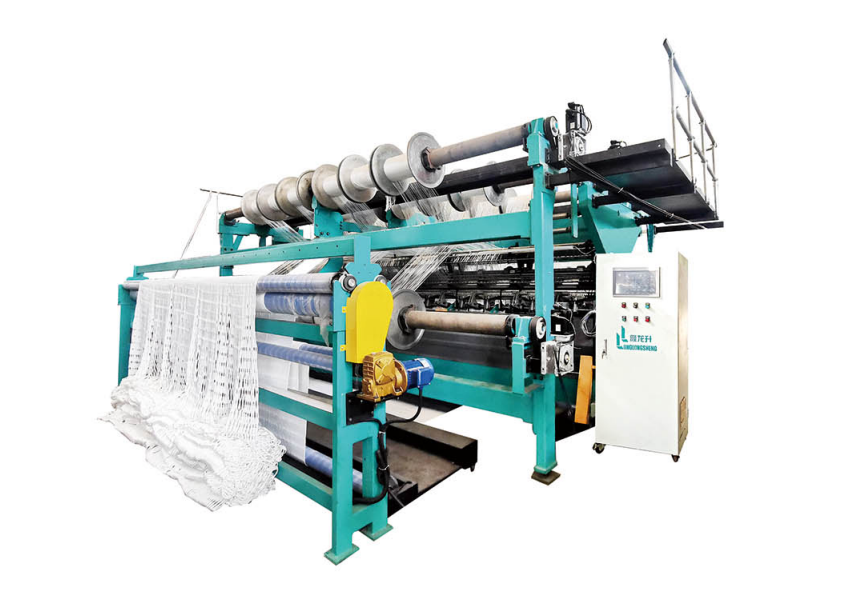
The GE2820 is intended for several net-production applications. The suitability of a specific product depends on its construction requirements and the selected machine configuration.
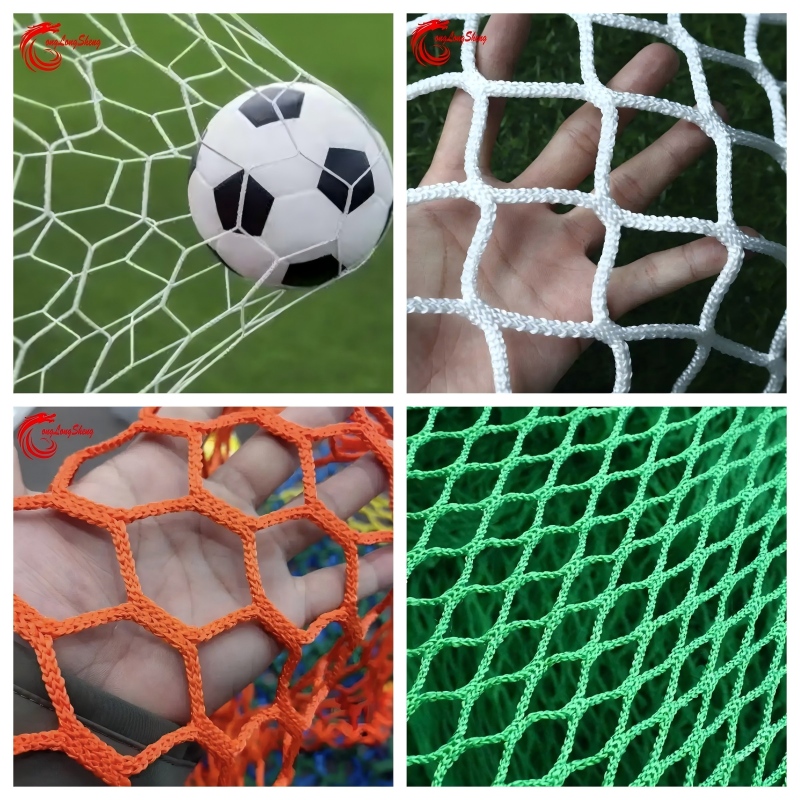
Sports nets are used in sporting facilities, training areas, and recreational environments. Examples include goal nets, training nets, court divider nets, and protective nets around sports areas.
Different sports net products may require different mesh openings, yarn characteristics, dimensions, and strength properties. A net used to separate playing areas may have different requirements from a net designed to stop or contain sports equipment.
Manufacturers should identify the intended use and provide the relevant product specifications before confirming the machine setup.
Safety and protective nets are used in industrial, construction, and other environments where containment and protection are important.
Their requirements can vary considerably. Mesh dimensions, yarn properties, finished construction, durability, and applicable safety standards may all affect product selection.
A machine's ability to knit a net structure does not automatically mean that the finished product complies with a particular safety standard. Manufacturers must verify the finished net against the applicable requirements for its intended use.
Packaging nets can be used to contain, bundle, or protect products during handling and transportation.
Depending on the application, manufacturers may need to consider mesh opening, flexibility, finished width, appearance, and packaging format. The required net structure and yarn specifications should be established before selecting the knitting configuration.
For specialized packaging nets, providing a sample or technical drawing helps the supplier assess whether the proposed setup is suitable.
The most reliable approach is to define the target net before choosing the machine configuration.
Buyers should prepare the following information:
Intended application and finished-product dimensions
Required mesh opening and net construction
Yarn material and specifications
Required strength, durability, or compliance characteristics
Target production volume and operating schedule
Required roll dimensions or downstream processing method
This information allows the supplier to evaluate the proposed machine configuration against actual production requirements.
The following table summarizes the available GE2820 specifications.
| Technical Item | Specification |
|---|---|
| Machine type | Double Needle-bar Warp Knitting Machine |
| Main applications | Sports nets, safety nets, packaging nets |
| Needle type | Latch needle |
| Available gauges | E2, E6, E9, E12 |
| Number of guide bars | 6–8 |
| Nominal working widths | 170 inches (4318 mm), 210 inches (5334 mm) |
| Knitting element drive | Open cam system |
| Warp let-off system | EBA |
| Pattern device | EL |
| Fabric batching | Separate batching system |
| Listed beam sizes | 21 × 21 inches, 30 × 21 inches |
The final configuration should be confirmed against the official technical quotation. Not every listed option should be assumed to apply to every machine arrangement.
Machine gauge describes the spacing of the needles in the knitting system. The GE2820 is available in E2, E6, E9, and E12 configurations.
Gauge is one factor that influences the structures a machine can produce, but it does not independently determine the final mesh opening or product quality. Yarn specifications, guide-bar movements, machine settings, and the intended knitting structure must also be considered.
A finer or coarser gauge should not be selected simply because a finished net appears visually fine or coarse. Buyers should confirm the required structure with the supplier and, where necessary, evaluate a sample.
The GE2820 supports 6–8 guide bars. Guide bars control yarn movement during knitting and contribute to the formation of the required fabric structure.
The appropriate arrangement depends on the target product and knitting pattern. Different net constructions may require different yarn paths and guide-bar settings.
Buyers should therefore confirm the guide-bar configuration needed for their specific product rather than assuming that the maximum number of guide bars is always the best option.
The warp let-off system supplies yarn to the knitting zone. Stable yarn delivery is important for maintaining suitable yarn tension and consistent fabric formation.
The GE2820 specification lists an EBA warp let-off system and an EL pattern device. Their exact functions and configuration should be confirmed against the machine's technical documentation.
The pattern device and guide-bar arrangement must be compatible with the intended knitting structure. Before ordering, manufacturers should discuss the required pattern, yarn arrangement, and adjustment capabilities with the supplier.
Fabric batching collects the knitted material as production proceeds. The batching arrangement should be suitable for the finished net, its width, and the intended downstream handling process.
Manufacturers should consider how the net will be inspected, cut, rolled, stored, and packaged. These requirements can influence the overall production-line arrangement even when the knitting machine itself is suitable.
The GE2820 is listed with nominal working widths of 170 inches (4318 mm) and 210 inches (5334 mm).
The correct choice depends on the required finished-net width, product range, production planning, and factory layout. A wider machine is not automatically the more economical choice for every manufacturer.
Start with the actual dimensions of the finished net. Account for edge treatment, trimming, and any width reduction required during downstream processing.
The usable production width should be confirmed with the supplier rather than assumed to be identical to the nominal machine width.
Manufacturers producing one standard product may have different requirements from factories that regularly switch between several net widths.
If the planned product range includes multiple dimensions, evaluate how the machine configuration and downstream equipment will accommodate those products.
Machine installation requires sufficient space for operation, maintenance, yarn preparation, and the movement of finished material.
The wider configuration should be evaluated in relation to the available factory layout and the space needed for related equipment.
Working width should match realistic demand and the planned product mix. Choosing a machine that is significantly wider than required may not provide a meaningful benefit if the additional width cannot be used efficiently.
The best choice is the configuration that meets the finished-product requirements while supporting a practical production plan.
Production capacity depends on more than the maximum machine speed. Actual output is influenced by the product structure, yarn, machine settings, operating conditions, and production efficiency.
Different knitting structures may require different operating conditions. A machine speed suitable for one product may not be appropriate for another.
Maximum rated speed should therefore be distinguished from stable operating speed for a specific net product.
Before estimating output, manufacturers should confirm the proposed operating conditions for the target yarn and mesh structure.
Yarn characteristics and preparation can influence knitting stability and the consistency of the finished net.
Differences in yarn properties, tension, or supply conditions may affect fabric formation and production efficiency. Appropriate yarn preparation and machine adjustment are important when establishing a stable production process.
Mesh opening, yarn arrangement, and the required finished construction affect how the machine must be configured.
A net designed for a particular application may have different requirements from another net made on the same machine. Production estimates should therefore be based on the actual product rather than a general machine specification.
Actual output also depends on yarn breaks, machine stoppages, adjustment time, inspection, and operator familiarity with the equipment.
A realistic production plan should account for normal operating interruptions instead of assuming that the machine will run continuously at its maximum rated speed.
Before purchasing, buyers should provide the intended net specifications and expected operating schedule. The supplier can then assess the proposed configuration and discuss realistic production expectations.
Where possible, a sample trial using the intended yarn and knitting structure provides a more useful basis for evaluation than a theoretical estimate alone.
Any quoted output should clearly state the product, operating conditions, and measurement method used.
A systematic selection process helps manufacturers reduce uncertainty before purchasing equipment.
Identify the application, mesh opening, finished width, roll dimensions, required strength, and applicable product standards.
The more specific the product requirements, the easier it is to evaluate a suitable machine configuration.
Provide information about the yarn material and relevant specifications. Yarn properties influence the knitting setup and should be considered when evaluating gauge and operating conditions.
Evaluate the gauge and guide-bar configuration against the target knitting structure. The appropriate setup should be confirmed with the supplier rather than selected solely from the application name.
Compare the 170-inch and 210-inch options with the required finished width, planned product range, and factory layout.
Discuss the target output, expected operating hours, product changeovers, and downstream processing capacity.
Provide a physical net sample, technical drawing, or detailed product specification. For new or specialized products, a trial can help confirm whether the proposed configuration meets the required construction and quality expectations.
A clear technical brief helps the supplier evaluate the required configuration and prepare a more accurate quotation.
Before requesting a quotation, prepare the following information where available:
Target product:Sports net, safety net, packaging net, or another specified net product.
Finished dimensions:Required width, length, and roll dimensions.
Mesh requirements:Mesh opening and construction details.
Yarn information:Material and available yarn specifications.
Quality requirements:Relevant strength, durability, appearance, or compliance requirements.
Production target:Expected output and operating schedule.
Factory conditions:Available installation space and relevant utilities.
Downstream processes:Cutting, rolling, inspection, packaging, or other planned operations.
Buyers should also confirm installation arrangements, operator training, spare-parts availability, maintenance requirements, and the scope of technical support included in the quotation.
Providing a representative sample or drawing is particularly helpful when the product has specialized mesh or performance requirements.
The long-term performance of a warp knitting machine depends on appropriate installation, operation, and maintenance.
Before installation, confirm the required floor space, machine layout, foundation or floor requirements, electrical supply, and any other conditions specified in the official installation documentation.
The exact requirements depend on the machine configuration and should be verified with the supplier before delivery.
Routine maintenance should follow the manufacturer's instructions and may include checking knitting elements, yarn paths, drive components, lubrication points where applicable, and relevant tension or control settings.
The machine should be stopped and isolated according to the approved safety procedure before maintenance work is performed.
A documented maintenance schedule can help operators identify wear, reduce avoidable stoppages, and maintain stable production conditions.
Before purchasing, ask the supplier about installation guidance, operator training, operating documentation, troubleshooting assistance, spare parts, and after-sales service.
The availability and scope of these services should be confirmed in the quotation or sales agreement.
The GE2820 is intended for sports nets, safety and protective nets, packaging nets, and related technical net products. Suitability for a particular product depends on its construction and the selected configuration.
The listed gauges are E2, E6, E9, and E12. The appropriate gauge should be selected according to the yarn, target mesh structure, and finished-product requirements.
The listed nominal working widths are 170 inches (4318 mm) and 210 inches (5334 mm). Confirm the usable production width and configuration details with the supplier.
The listed configuration supports 6–8 guide bars. The appropriate arrangement depends on the intended knitting structure.
No. Actual output also depends on knitting structure, yarn properties, machine settings, operating efficiency, downtime, and downstream processes.
Provide the supplier with the target net sample or drawing, yarn specifications, mesh opening, and finished dimensions. These details help establish a suitable configuration.
The machine is designed for several net-production applications. Each intended product should be evaluated against its mesh structure, yarn, dimensions, and performance requirements before the configuration is confirmed.
Prepare the intended application, target net specifications, yarn information, finished width, expected production requirements, and any special quality or compliance conditions.
In addition to the knitting machine, evaluate yarn preparation, material handling, finished-net batching, inspection, cutting, rolling, and packaging as required by the product and factory workflow.
Discuss the target product and available sample with the supplier. Where feasible, a trial using the intended yarn and knitting structure can help assess configuration suitability and product quality.
The GE2820 Double Needle-bar Warp Knitting Machine is intended for manufacturers producing sports nets, safety and protective nets, packaging nets, and related technical net products.
Its listed configurations include E2, E6, E9, and E12 gauges, 6–8 guide bars, and nominal working widths of 170 and 210 inches. The most suitable configuration depends on the finished net, yarn specifications, mesh structure, production requirements, and downstream processing arrangements.
Rather than selecting a machine based on one parameter alone, manufacturers should define their product requirements first and confirm the proposed configuration against those needs.
Preparing a net sample, technical drawing, or detailed specification is a practical starting point for evaluating whether the GE2820 is suitable for a particular production application.
Next: None
LongLongSheng GE2816 double needle-bar warp knitting machine for knotless fishing nets & safety nets. Check specs, sp…
Learn about the SG2319TL shade net warp knitting machine, including working width, gauge, speed, yarn systems, applicatio…
Learn everything about the HSGE2320-4 High Speed Warp Knitting Machine, including applications, specifications, maintenan…