LONGLONGSHENG machine - Warp knitting machine China Suppliers
Mobile Browse


Sources: | Release date: 2025-11-29 18:00:18 | View: 725
Abstract:
The production of knitted mesh fabrics for luggage and bags requires focused attention on three core aspects: material selection, process control, and quality inspection. This ensures products combine strength with aesthetic appeal.
The production of knitted mesh fabrics for luggage and bags requires focused attention on three core aspects: material selection, process control, and quality inspection. This ensures products combine strength with aesthetic appeal.
- Abrasion Resistance: Prioritise high-abrasion-resistant materials such as nylon and polyester to minimise wear risks during prolonged use.
- Tear Resistance: Select three-layer mesh or diamond-patterned structures, employing stress-distribution designs to enhance tear resistance.
- Lightweighting: Control denier (e.g., 70D, 210D) and thickness to balance strength with portability.
- Warp knitting parameters: Adjust stitch pitch (recommended 6-8 stitches/inch) and yarn tension to ensure uniform mesh without yarn slippage.
- Heat treatment: Maintain setting temperatures between 140-190°C to stabilise yarn structure and enhance UV resistance.
- Surface treatment: Apply PU coating or eco-friendly adhesives (e.g., TPE) to improve waterproofing while preventing excessive hardness that compromises tactile feel.
- Yarn breakage inspection: Conduct real-time checks during production to identify broken threads or pilling, preventing defects from progressing to subsequent stages.
- Mechanical Testing: Verify the fabric's elongation at break through tensile testing to ensure load-bearing components meet design specifications.
- Visual Inspection: Assess mesh symmetry, edge flatness, and colourfastness (must comply with EU non-azo dye standards).
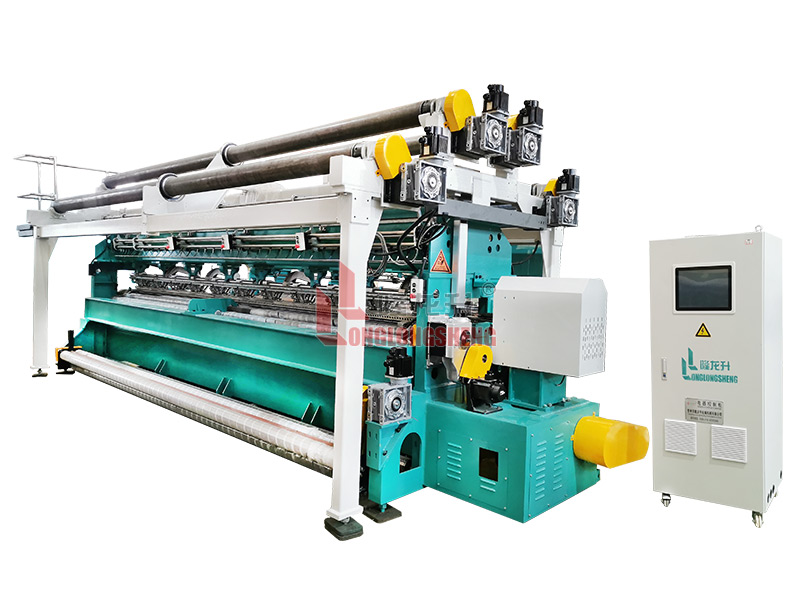
Explore GE2820 warp knitting machine specifications, net applications, configuration options, production factors, and buy…
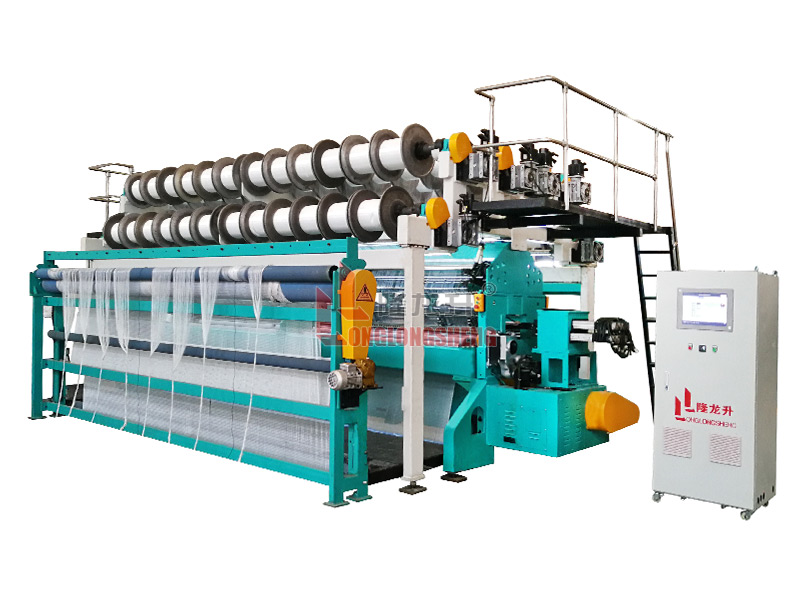
LongLongSheng GE2816 double needle-bar warp knitting machine for knotless fishing nets & safety nets. Check specs, sp…
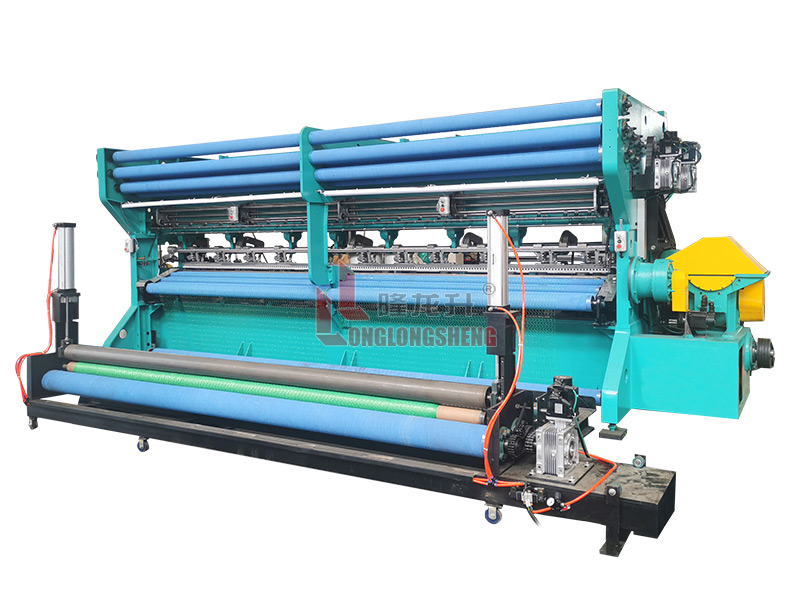
Learn about the SG2319TL shade net warp knitting machine, including working width, gauge, speed, yarn systems, applicatio…